GLP-1 Muscle Loss Isn’t the Whole Story

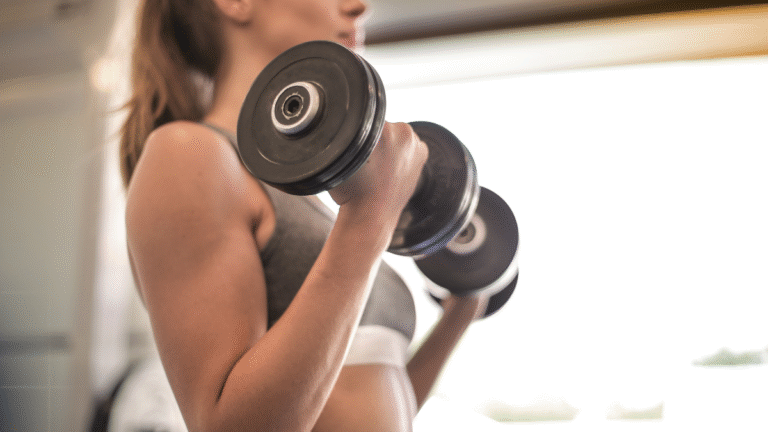
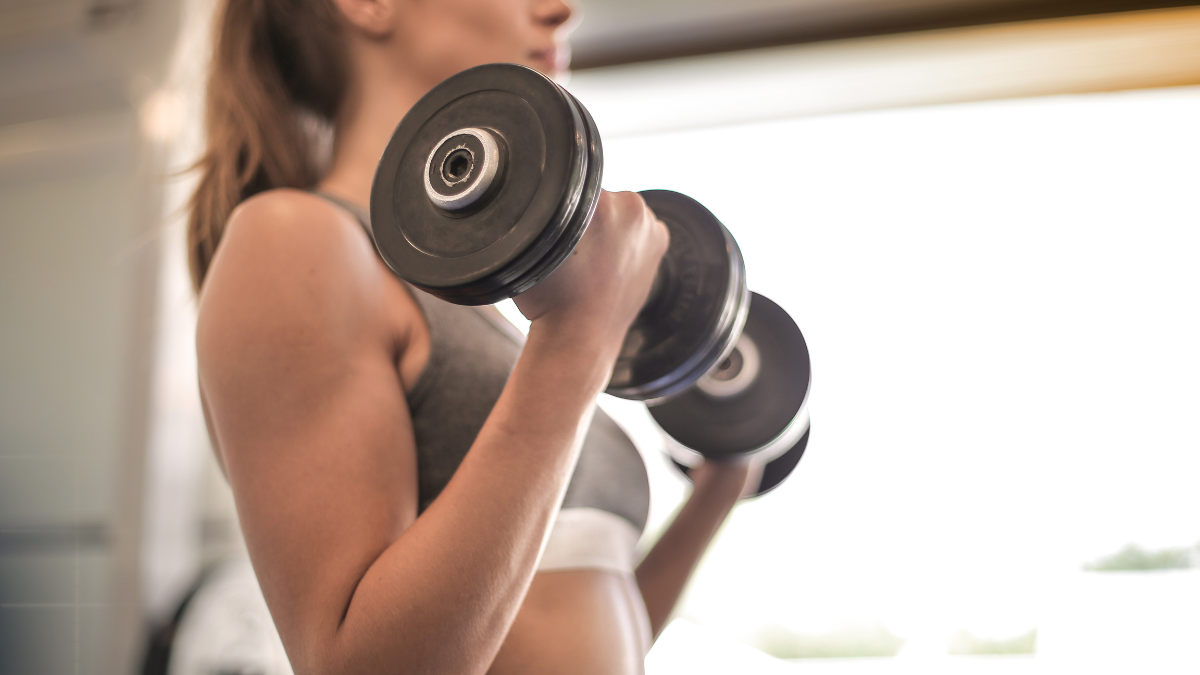
An image of a woman lifting dumbbells to prevent GLP-1 Muscle Loss

By now, we’ve all seen the warnings about GLP-1s and muscle loss. Some articles make it sound like the medication is eating away at your skeletal muscle1. Others act like there is nothing to worry about at all2. Then somewhere in the middle, someone starts talking about DEXA scans and lean mass, and now the whole conversation feels confusing.

As a trainer who works with women using GLP-1s, I know the science is still evolving, especially around long-term use for weight loss. I pay attention to the research, but I also focus on what we already know from years of weight loss, nutrition, and resistance training data.

So, the part I worry about most is whether your body is getting weaker while it is getting smaller. Weight loss can absolutely improve quality of life. Your joints start to feel better, movement becomes easier, you have more energy, and your lab work may show improving health markers. But problems can also show up when appetite drops so low that you struggle to eat enough, you’re not getting enough protein, resistance training is missing, and overall daily movement starts to decrease. At that point, your body has less reason to hold onto muscle.

We don’t need to panic over every headline, but we should still pay attention as the research evolves. Right now, there is no clear evidence proving GLP-1 medications directly cause muscle loss as a unique drug side effect3. The bigger issue is that weight loss from any method can reduce lean mass, including skeletal muscle, when food, protein, and resistance training are not part of the plan. With GLP-1s, that risk can be easier to miss because appetite changes quickly. So, we need to give your body a reason to hold onto muscle while the weight comes off.


What Makes Up Lean Body Mass?

  • Muscles
  • Bones
  • Organs
  • Tendons and ligaments
  • Connective tissue
  • Water

So, when you hear that people on GLP-1s “lose lean mass,” that doesn’t automatically mean they’re just losing muscle4. Lean mass is a category, and as you can see from the list, muscle is just one part of it.

Some of what you lose might be:

  • Water weight, especially from glycogen (stored carbs that hold water inside muscle)
  • Even small changes in organ size, which naturally shrink when you’re eating less
  • Fat that was stored inside the muscle itself (improving muscle quality)

This means that it’s not just your quads or glutes shrinking.

Your Body Has Three Types of Muscle (And They Adapt Differently)

When people talk about lean muscle, they usually mean the kind you build through resistance training, but your body actually has three types of muscle:

  • Cardiac muscle – this is your heart. It beats and pushes blood through your body 24/7, whether you think about it or not. Things like walking, cycling, swimming, or steady-paced movement make your heart stronger and more efficient. Over time, it can pump more blood with each beat and doesn’t have to work as hard at rest.
  • Smooth muscle – the muscle wrapped around your organs. It helps with digestion, breathing, blood flow, and all other behind-the-scenes stuff you don’t consciously control.
  • Skeletal muscle – the kind you can see and strengthen, it helps you lift, squat, carry groceries, stand tall, and even smile.

All three are extremely important, but they adapt in different ways. Skeletal muscle is the only type you can intentionally grow in size and strength through resistance training.
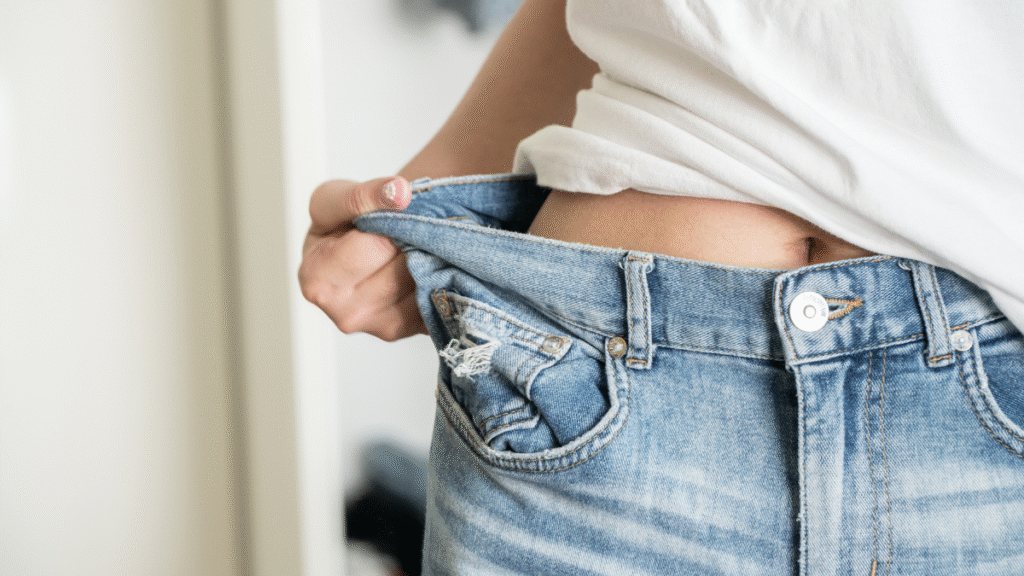
An image of a woman showing her off in jeans after weight loss using GLP-1 Meds because she is happy.

What’s Actually Happening When You Lose Weight?

When you’re in a calorie deficit, meaning you’re using more energy than you’re eating, your body needs fuel. It will pull from stored energy to keep you functioning. That includes body fat, but also stored carbs, or glycogen, and, if you’re not strength training or eating enough protein, muscle tissue as well.

Your body’s main goal is survival, not fat loss. It doesn’t know you are intentionally trying to lose body fat. It just knows energy is lower, so it pulls from wherever it can.

And early on, a lot of what drops is water. When your body burns through stored glycogen (carbs stored in your muscles), the water attached to it leaves too. That’s why the scale can move quickly in the beginning. This happens during any type of weight loss, not just on GLP-1s.

Muscle Is “Expensive” for the Body to Keep

Muscle is metabolically active. That means it needs energy to maintain, even when you’re just sitting around. So the more muscle you have, the more energy your body naturally uses in a day.

But during weight loss, especially if it’s fast, your body is trying to hold on to energy. From a survival standpoint, muscle is “expensive.” If you’re not using it consistently, your body may decide it doesn’t need to keep all of it.

And that can lead to:

  • Lower resting metabolic rate – With less muscle, your body needs less energy to run day to day. Over time, that can make weight regain easier.
  • Poor balance and joint support – Muscles help stabilize your knees, hips, core, and spine. When they’re weaker, you feel less steady, and things like stairs, bending, or longer walks can feel harder.
  • More fatigue – Less muscle means your body has to work harder to do everyday stuff, so you tire out more quickly.
  • Higher risk of injury – Strong muscles act like shock absorbers. They take on force when you move or lift something heavy. When they’re weaker, more of that stress shifts to your joints instead.

Weight Loss Should Never Leave You Feeling Fragile

Signs you might be losing too much muscle:

  • Everyday things feel harder than they used to
  • You’re slouching more, or your body feels “wobbly”
  • You’re losing weight and you’re not resistance training
  • You’re barely eating protein
  • You’re getting sick all the time or healing slower than usual

How to Protect (and Even Build) Muscle on GLP-1s

GLP-1s lower appetite, so that means you’re most likely eating less, and less food means less protection for skeletal muscle. So you have to be intentional.

  • Eat enough protein: Protein isn’t optional during weight loss, but it can be harder to hit your target when you feel nauseous or have GI issues. A good starting point is at least 1.2 grams per kilogram of your body weight (for example, if you weigh 200 pounds, that’s roughly 110 grams of protein per day). You can use this calculator to see what that looks like for you while on GLP-1s.
  • Resistance train 2–3 times a week: You don’t need to crush it daily, but your muscles need a reason to stick around. Prioritize full-body resistance training or split routines that challenge you, not exhaust you. You want steady progress, not punishment.
  • Slow down your reps: Fast and sloppy doesn’t build strong, toned muscle. Slow, controlled movements (especially during the lowering phase) help your muscles work harder without needing to lift super heavy. Plus, it’s gentler on joints and reduces injury risk.
  • Move daily: Standing more, stretching, walking, stairs, housework. It all adds up and supports your metabolism.
  • Get enough rest: Muscle doesn’t grow during the workout. It grows after. And when you’re eating less on a GLP-1, recovery matters even more. That means:
    • Taking rest days seriously
    • Giving your muscles time between workout sessions
    • Not panicking if you need a little longer to bounce back at first

Download The Remedy Method Starter Workout Guide

This isn’t a full program, but it’s a solid place to start if you’re not sure what your body needs right now. It’s designed for women on GLP-1s who want to train with intention, without jumping into something too intense too soon. The focus is on quality reps, good movement patterns, and rebuilding strength the right way, especially if it’s been a while.

The Takeaway

GLP-1 medications don’t magically eat your muscle. Muscle loss usually happens when:

  • Calories drop
  • Protein is too low
  • Strength training isn’t there

The scale going down isn’t the problem. Getting weaker while it’s happening is, but you can influence that part.

If you want more structure around how to train during this phase, you can learn more about The Remedy Method or get to know how I work here.

And if you have questions, reach out. I’m happy to help.


Resources

  1. Weight-Loss Drugs Reduce Muscle More Than Expected – Medscape – April 20, 2026. https://www.medscape.com/viewarticle/weight-loss-drugs-reduce-muscle-more-than-expected-2026a1000c9k?_gl=16vla4d_gcl_au*MTc5ODY5NTM3LjE3Nzc3Mzg2OTUuMTgyOTQzODY1NS4xNzc4MjUzNjkzLjE3NzgyNTQyNzM ↩︎
  2. No Need to Worry About GLP-1-Induced Muscle Loss – Medscape – May 01, 2026. https://www.medscape.com/viewarticle/no-need-worry-about-glp-1-induced-muscle-loss-2026a1000dr2?ecd=a2a ↩︎
  3. Rossi G, Bucciarelli L, Mananguite CL, Giovarelli M, Fiorina P. Muscle loss and GLP-1R agonists use. Acta Diabetol. 2026 Feb;63(2):333-342. doi: 10.1007/s00592-025-02611-2. Epub 2025 Nov 7. PMID: 41201615; PMCID: PMC12957034. https://pmc.ncbi.nlm.nih.gov/articles/PMC12957034/ ↩︎
  4. Neeland IJ, Linge J, Birkenfeld AL. Changes in lean body mass with glucagon-like peptide-1-based therapies and mitigation strategies. Diabetes Obes Metab. 2024 Sep;26 Suppl 4:16-27. doi: 10.1111/dom.15728. Epub 2024 Jun 27. PMID: 38937282. https://pubmed.ncbi.nlm.nih.gov/38937282/ ↩︎

Photo Credits

Fit Female in Activewear Holding Dumbbells by Andrea Piacquadio from Pexels

Person Showing Weight Loss with Loose Pants by NOMADNES

This article is for educational purposes and is not intended to replace medical consultation. Always consult a healthcare professional before making health-related decisions. If something here doesn’t sit right with you, take a closer look. Ask questions, look into it further, and make sure it makes sense for your body and your situation. When relevant, I include references to support key points so you can explore things more on your own.

Read the full disclaimer here. 

Editorial Note: Portions of this article may be supported by editorial tools, including AI. All content is researched, written, reviewed, and approved by Claudia Dzina, CPT, before publication

The Remedy Method

Most exercise programs focus on what to do.
This work focuses on helping your body feel steady and capable again as it changes.

Training is guided, intentional, and paced to support strength, balance, and confidence in real life, not just workouts.

If your body feels different and you’re not sure where to start, this is a supportive place to begin.

This is where it begins.

Share a bit about where you are so I can meet you there with the right kind of training support.

Heart Rate & Effort Calculator

Understand Your Heart Rate Zones 

Estimate your heart rate zones and learn what each effort level should actually feel like.

Heart rate zones can help you understand how hard your body is working during cardio, walking, strength circuits, or conditioning. But heart rate is only one way to measure intensity. Your heart rate can be affected by sleep, stress, hydration, medication, caffeine, fitness level, and even the temperature in the room.

This calculator gives you an estimate that you can compare with your breathing, talk test, and rate of perceived exertion (RPE) so you can understand effort in a more practical way.

Use heart rate as a guide. If your smartwatch or fitness device says one thing but your body says something else, pay attention.

Check in with yourself and ask:

  • Can I talk?
  • Can I control my breathing?
  • Could I sustain this pace?
  • Do I feel steady or overwhelmed?
  • Does this match the goal of today’s workout?

Age (years)

This tool is for education only. It does not diagnose, prescribe exercise intensity, or replace guidance from your medical team. If you take medication that affects heart rate or have cardiovascular concerns, ask your medical provider what intensity range is appropriate for you.

Is The Remedy Method
Right For Me?

(Find out in less than 1 minute!)

Answer a few quick questions about how your body feels and how you like to exercise. This will help you see if The Remedy Method, which blends corrective exercise, Pilates-style control, and strength training for women on GLP-1 medications, is a good fit for you.

1. Are you currently using a GLP-1 medication?

2. How often do you notice nausea, dizziness, low energy, or fast fatigue during movement?

3. Have you noticed changes in your balance, coordination, or stability since your body started changing?

4. Do certain movements feel awkward or disconnected now, like squats, lunges, bending, stepping, or getting off the floor?

5. Do you notice any of these when you move or exercise? (Select all that apply.)

6. Do you feel comfortable exercising in a public gym or group class?

7. Does the idea of guided instruction sound helpful right now?

8. Have you ever felt rushed, judged, or misunderstood by past trainers or programs?

9. What matters most to you right now? (Select all that apply.)

10. Do you want a structured plan with phases that build on each other?

11. Can you commit to training at home with simple equipment or none at all?

12. Would you benefit from having a trainer watch your form and guide your pacing in real time over Zoom?

This quiz is for education and reflection. It is not a medical screen or diagnosis. Always follow the guidance of your medical team for movement and exercise.

GLP-1 Nutrition
Reflection Tool

A quick check-in on your last meal and today’s patterns so you can see what your body might be asking for next.

Step 1 of 4
Think of your last meal. How many different colors were on your plate?
Where did most of the color come from?
What was the main protein in your last meal?
How was that protein prepared?
How many sides did you have with that meal?
What best describes your sides? (Choose all that apply.)
How were your sides prepared?
What was the main starch or grain at your last meal?
How much of your plate did that starch or grain take up?
Which of these were part of your last meal? (Choose all that apply.)
About how long did it take you to eat your last meal?
What were you doing while you ate?
Where did your last meal come from?
How long did it take to get that meal from “I’m hungry” to “let’s eat”?
How easy was this meal to put together?
Were you able to finish everything on your plate?
How did you feel 30–60 minutes after that meal?
So far today, how many different fruits have you eaten?
So far today, how many different vegetables have you eaten?
How many times have you reached for a snack today?
Which of these sounds most like your typical snack today?
What color were most of your drinks today?
Did you add anything to your drinks to make them taste better?
In the past week, how often have you felt too full to finish a small or normal-sized meal?
In the past week, how often have you felt nausea or strong discomfort after eating?
In the past week, how often have you gone more than 5 waking hours without eating anything?
Thinking about a typical day, how do your meals usually look?
Over the past week, how has your sleep been?
Do you have any kind of evening wind-down routine?
Your GLP-1 Meal Reflection
What this might be telling you
Optional: next-step ideas

    BMI & Waist Check

    Use this tool to look at your Body Mass Index (BMI) and waist size.

    BMI compares your height and weight to estimate general body size. It does not measure fat or muscle and cannot show how your body is changing with strength training or GLP-1 use. It is simply a numerical estimate.

    Waist size provides additional information because abdominal fat is more closely linked to metabolic risk than fat stored in other areas. Measuring the waist gives a better idea of where the body is holding weight.

    Both BMI and waist size can change quickly when someone starts a GLP-1. Muscle, water, and fat often shift at different rates, so these numbers work best as general reference points rather than something to obsess over.

    This tool gives you a simple snapshot you can use for your own self-awareness or just to know before doctor’s appointments. It’s one of several things to pay attention to, along with movement quality, strength levels, recovery, and daily well-being.

    Waist size is optional. The tool will still calculate your BMI if you skip that section.

    BMI Categories:


    • Underweight: Below 18.5
    • Healthy weight: 18.5 – 24.9
    • Overweight: 25 – 29.9
    • Obese: 30 or greater
      • Class I (Mild): 30–34.9
      • Class II (Moderate): 35–39.9
      • Class III (Severe): 40 or greater

    Unit of measure

    Sex

    Age (years)

    Height (feet)

    Height (inches)

    Weight (pounds)

    Waist circumference (inches, optional)

    This tool is for education only. It cannot diagnose medical conditions. If you have new symptoms or health concerns, talk with your medical team for guidance. For adults only. BMI is one data point and does not reflect muscle, body composition changes on GLP-1s, or overall health.

    Is The Remedy Method
    Right For Me?

    1. Are you currently using a GLP-1 medication?

    2. How often do you notice nausea, dizziness, low energy, or fast fatigue during movement?

    3. Have you noticed changes in your balance, coordination, or stability since your body started changing?

    4. Do certain movements feel awkward or disconnected now, like squats, lunges, bending, stepping, or getting off the floor?

    5. Do you notice any of these when you move or exercise? (Select all that apply.)

    6. Do you feel comfortable exercising in a public gym or group class?

    7. Does the idea of guided instruction sound helpful right now?

    8. Have you ever felt rushed, judged, or misunderstood by past trainers or programs?

    9. What matters most to you right now? (Select all that apply.)

    10. Do you want a structured plan with phases that build on each other?

    11. Can you commit to training at home with simple equipment or none at all?

    12. Would you benefit from having a trainer watch your form and guide your pacing in real time over Zoom?

    This quiz is for education and reflection. It is not a medical screen or diagnosis. Always follow the guidance of your medical team for movement and exercise.

    Movement Pattern Starting Point

    Answer these questions about how your body feels today. This tool helps you find a safe starting point for key movement patterns if you are using GLP-1 medications or coming back to exercise after weight loss. The goal is to match your body to the right level of support, not to push through pain or fear.

    1. How do your knees feel when you walk, use stairs, or stand up from a chair?

    2. How does your low back feel today?

    3. How steady do you feel on your feet?

    4. Can you safely get down to the floor and back up on your own?

    5. Any foot or ankle pain when you walk or stand?

    6. Right now, how confident do you feel about moving your body?

    This tool is for education only. It cannot diagnose injuries. If you have strong pain, falls, or new symptoms, talk with your health care team before starting or changing your exercise plan.

    GLP-1 Training
    Readiness Check

    Many women notice changes in balance, coordination, and strength as they lose weight. This tool helps you choose movements that feel supportive instead of stressful, so you can build confidence and avoid overloading joints or overworking muscles that are still adjusting.

    1. Have you eaten a small meal or snack in the last 2 to 3 hours?

    2. How is your stomach right now?

    3. How is your energy right now on a scale from 1 to 10?

    4. Have you felt dizzy, faint, or lightheaded when you stand up today?

    5. Any new sharp pain, chest tightness, or trouble breathing since your last workout?

    This tool is for education only and does not replace medical advice. If you ever feel unsure, choose rest and contact your health care team.

    Macro Split Calculator

    First, calculate your daily protein target using the protein calculator.

    Then enter your maintenance calories from the TDEE calculator, or type in a starting estimate, and choose your goal. This calculator adjusts your calories based on that goal and shows you how those calories break down into protein, fats, and carbohydrates. This is called a macro split.

    For women using GLP-1 medications or going through weight loss, this structure is designed to make eating feel more manageable. Protein supports muscle. Fats support hormones and nutrient absorption. Carbohydrates support energy, movement, and recovery.

    Protein recommendations online can be confusing because the official Recommended Dietary Allowance (RDA) is designed to prevent deficiency, not necessarily support muscle retention during weight loss. The RDA for protein is 0.8 grams per kilogram of body weight, but many experts recommend closer to 1.2–1.6 g/kg during weight loss or resistance training. That is why our Daily Protein Target Calculator starts at 1.2 g/kg.

    Fat intake is usually recommended as a percentage of total calories rather than a fixed number. For most adults, about 20% to 35% of daily calories coming from fat is considered a balanced range. This calculator keeps fats within a moderate range while balancing protein and carbohydrates based on your calorie needs and goal.

    Carbohydrates help support energy, movement, recovery, and brain function. General nutrition guidelines often place carbohydrate intake within a broad range depending on activity level and calorie needs. Instead of using a rigid percentage, this calculator adjusts carbohydrates based on your calorie intake, protein target, and fat needs while maintaining a minimum intake for daily function and energy levels. However, carbohydrate needs can still vary widely depending on activity level, appetite, medications, and overall calorie intake.

    Your protein target comes directly from the protein calculator. This tool builds the rest of your intake around that number.

    This is a starting point, not a prescription. Your medical team may adjust your needs based on your health, labs, medication plan, and appetite.

    kcal

    Use your TDEE number from the TDEE calculator or enter a starting maintenance estimate. This calculator will adjust that number based on your goal before splitting your macros.
    Use my TDEE Calculation

    Adjusted calories: 0 kcal per day

    Protein: 0 g per day

    Fat: 0 g per day

    Carbs: 0 g per day

    This is a starting point, not a prescription. Your medical team may adjust your needs based on your health, labs, and medication plan.

    Daily Protein Target

    Enter your weight and choose how often you strength train. This calculator gives you a daily protein range in grams to help support muscle, recovery, and overall health.

    The Recommended Dietary Allowance (RDA) for protein is 0.8 grams per kilogram of body weight. That amount is the minimum needed for basic health, not for maintaining muscle during weight loss or training.

    People may need more than the RDA when they are:

    • losing weight
    • using GLP-1 medications
    • strength training
    • trying to keep or build muscle
    • over age 35

    This calculator starts at 1.2 grams per kilogram. Think of this as your baseline for muscle protection, not a goal you have to exceed. The range increases slightly based on how often you train. This reflects what your body could use if it is supported with enough food and recovery.

    Because appetite can be lower on GLP-1 medications, you do not need to chase the highest number in the range. Start with the lower end of your range and focus on consistency first. If your appetite allows and your body is responding well, you can gradually work toward the higher end. If not, staying at the lower end is still effective for protecting muscle.

    lb

    Recommended range:

    0 to 0 grams per day

    This range is an estimate based on body weight and strength training level. It is a guide, not a strict rule. Your medical team may adjust your protein needs, especially while you are on GLP-1 medication.

    TDEE & BMR Calculator

    Fill in your details to find your Total Daily Energy Expenditure (TDEE) and Basal Metabolic Rate (BMR).

    Your TDEE is the total amount of energy your body uses in a full day. This includes everything. Your workouts, walking, cleaning, daily movement, shifting posture, fidgeting, and even the energy it takes to digest your food.

    Part of your TDEE is your BMR. Your BMR is the energy your body needs for basic life functions like breathing, circulating blood, maintaining organs, and keeping your body temperature stable. This is what your body would use even if you stayed in bed all day.

    Understanding both numbers is helpful if you are on a GLP-1 or working on your health. Appetite can drop quickly, which makes it easy to undereat without noticing. Knowing your TDEE and BMR shows you how much fuel your body actually needs so you can keep your energy up, protect muscle, and support safe and steady fat loss.

    You can choose from three formulas to calculate these numbers. Mifflin-St. Jeor and Harris-Benedict use height, weight, age, and sex. Katch-McArdle uses body fat percentage if you know it. They use slightly different math equations, but they all estimate the same thing. Mifflin-St. Jeor is generally the most accurate for most people.

    lb
    in

    BMR: 0 kcal per day

    TDEE: 0 kcal per day

    These are estimates. Calculators may read low for people with more muscle and may not work well for people living with obesity. Use as a guide, not an exact number.

    Form-focused. Emotionally aware. Personalized support from the comfort of your home.

    Live Virtual Training Options

    Private, 1:1 via Zoom

    2 Sessions Per Week

    $35–$40 per session

    24 total sessions (12 weeks)

    Pay in Full:

    $840 ($35/Session)

    Best value. One-time payment. | 30-Day Money-Back Guarantee

    Pay Monthly:

    $320/month for 3 months ($40/session)

    Flexible plan.

    3 Sessions Per Week

    $35–$40 per session

    36 total sessions (12 weeks)

    Pay in Full:

    $1,260 ($35/session)

    Best value. One-time payment. | 30-Day Money-Back Guarantee

    Pay Monthly:

    $480/month for 3 months ($40/session)

    Flexible plan.

    Simple. Transparent. No surprises.

    Live, personalized training. No app. No gym. Support that adapts to your body and your life.