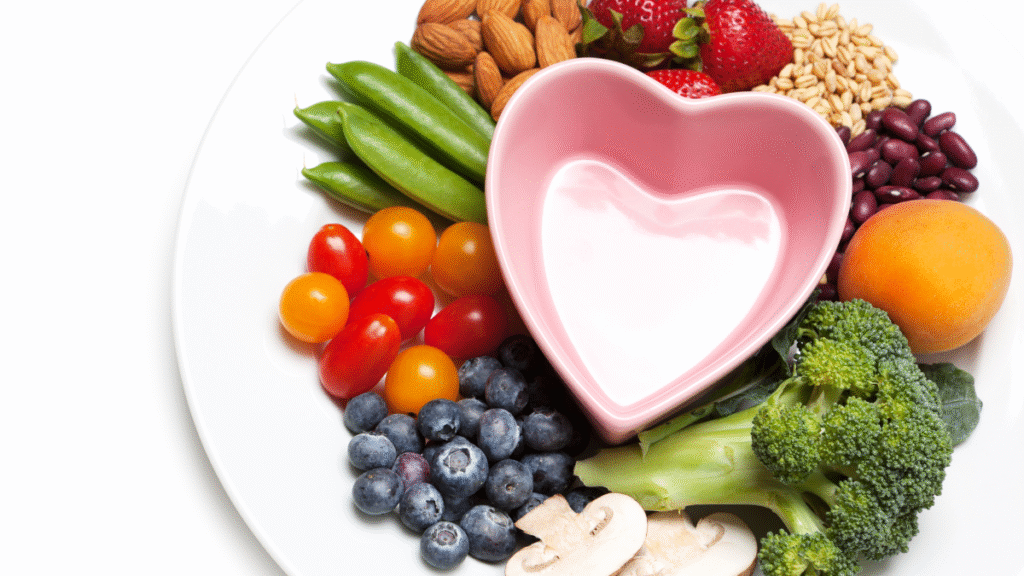
When you start taking better care of yourself...
This isn’t about lifting the most or training for a competition. It’s about moving through your day with more strength, balance, and confidence in the body you live in now.
All you need is a screen and a little space. No crowds. No pressure. Just focused movement that helps you feel steadier, stronger, and more in control.
Every session builds strength you can use. Getting up and down. Reaching, turning, carrying, and balancing. Training that supports how your body actually moves.
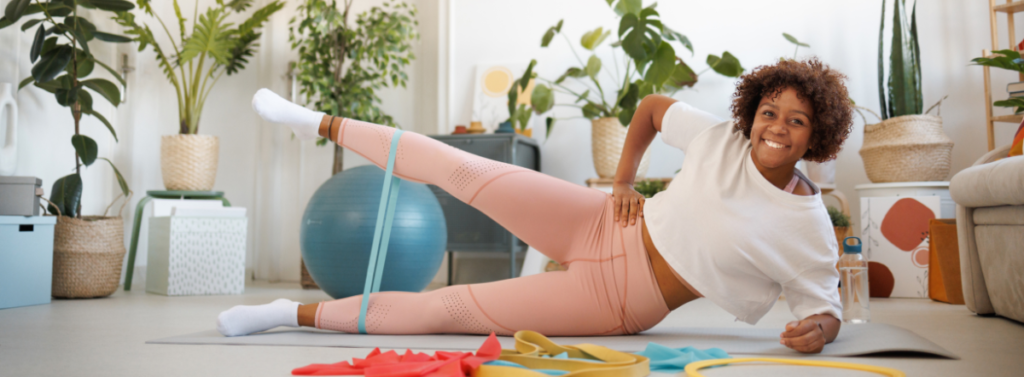
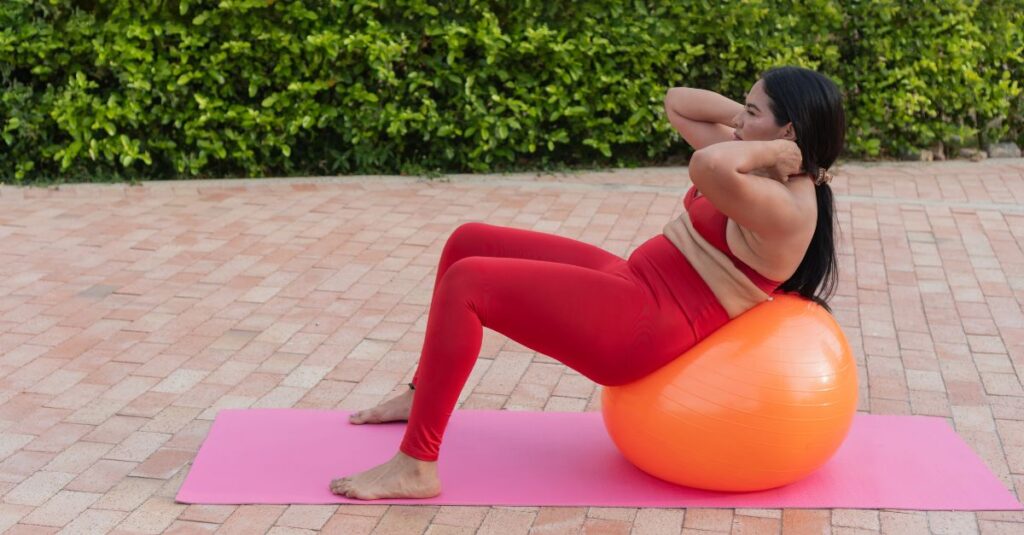
Whether you have equipment or just a floor, sessions are adapted to your space, your energy, and your real life. Nothing forced. Nothing performative.
A 12-week plan built around the three main goals we identify together.
Live Zoom sessions with real-time coaching, instruction, and adjustments.
Progressive strength training with corrective exercise and Pilates-based stability work.
Training that can adapt as your body, energy, recovery, and abilities change.
Your plan, resources, and progress reports every four weeks, all in one place.
Optional additional workouts, plus nutrition and wellness guidance when relevant.
Your sessions are private and live over Zoom. I coach you through the exercises in real time, answer questions as they come up, and make adjustments during the session when needed.
Because you’re training in your own space, we’ll work with the room and equipment you actually have available.
Even if you’ve never used Zoom before, I won’t leave you to figure it out on your own. I’ll give you simple instructions to get everything set up. It’s quick and easy. Before your first training session, we’ll test it together so you can see my space, I can see your setup, and we can make sure everything is ready for day one. You’ll also receive a complete training guide you can refer back to whenever you need it, with everything you need to prepare and feel comfortable with virtual training.
Every session follows a clear structure designed to support how your body moves and adapts on GLP-1s.
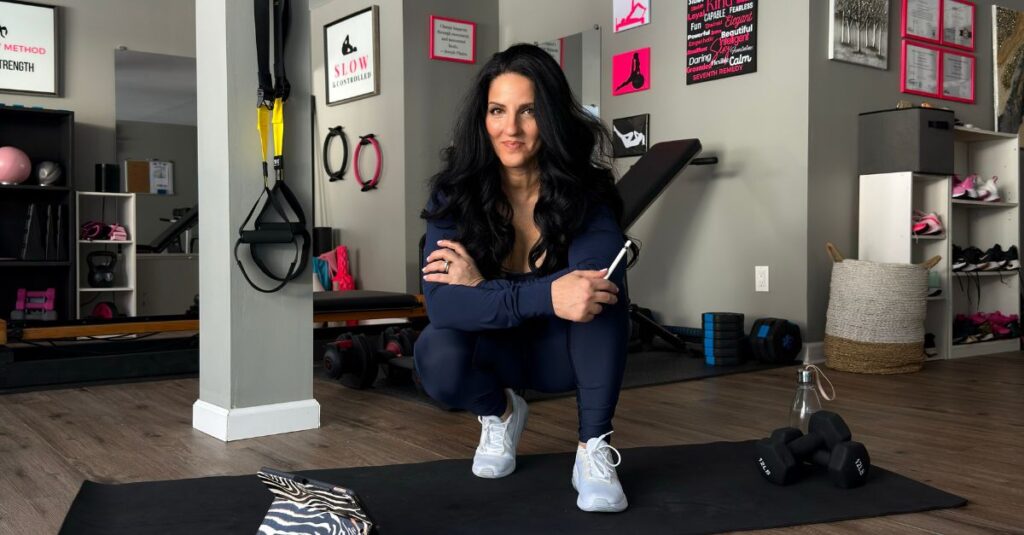
I’m Claudia, the trainer behind The Remedy Method. I work with women using GLP-1 medications who want to get stronger and hold onto their muscle as their bodies change.
I’m a big believer in training with intention. Not guessing your way through workouts or forcing things that don’t make sense, but also not avoiding the hard work it takes. There’s a way to train that respects where your body is and still expects it to get stronger.
Think of me as the one who’s going to break things down, simplify it, and help you build strength in a way that holds up in your real life.
All submissions are strictly confidential. You choose how you are identified.
The women I work with come from different backgrounds, fitness levels, and stages of life. While every experience is unique, many share a common goal of building strength, confidence, and trust in their bodies in a supportive, private coaching environment.
The women I work with often tell me they appreciate:
Answers to your most common questions when navigating fitness and energy on GLP-1s.
These meds are only approved for certain age groups, but within those ranges they can be used safely when they’re matched to the right person and closely monitored. Safety looks different for a 20-something, a woman in midlife, and a woman in her 70s, so the real question is whether a GLP‑1 fits your health history, meds, and goals, not whether they’re “good” or “bad” for everyone.
Most women notice some mix of nausea, feeling full very quickly, mild stomach upset, or changes in bathroom habits, especially when the dose increases; annoying, but very common as the gut and brain adapt to the medication. Some also notice feeling colder, more tired, or a bit “off” with appetite and energy, because GLP‑1s slow digestion and change how the body uses fuel. Severe or sudden symptoms, like intense stomach pain, nonstop vomiting, trouble staying hydrated, chest pain, trouble breathing, vision changes, or shaking/sweating that feels like low blood sugar, are medical issues, not fitness issues, and are a reason to contact a healthcare provider or urgent care right away.
GLP-1 meds were originally created to help people manage type 2 diabetes, and some versions are now also used to treat those living with obesity as an ongoing medical condition, not as a crash‑diet shortcut. In big trials, many people lost roughly 10–15% of their body weight over about a year when the medication was paired with real-life support around food, movement, sleep, and stress, not just “take this shot and hope.” How long you stay on it is usually a long-term conversation with your prescriber, similar to blood‑pressure or cholesterol meds, and depends on your health, side effects, and goals, not anyone else’s timeline.
Obesity is a chronic, relapsing disease, not a willpower problem, so when medication stops, the body often pushes back toward its old “set point,” and many people regain at least some weight over time. In one semaglutide study, people regained about two-thirds of the weight they had lost a year after stopping, which tells us more about how strong the biology is than how “good” or “bad” they were at habits.
That said, being healthy and being thin are not the same thing: strength, blood sugar, blood pressure, liver health, sleep, mood, and how you move through your day all matter, even if the scale drifts. Habits like protein‑forward eating, resistance training, daily movement, stress support, and decent sleep will not erase an underlying metabolic disease, but they can help you keep more of the benefits, protect muscle and bones, and feel better in your actual life with or without a GLP-1s.
Anytime you lose weight, on a GLP‑1 or not, some of that loss can be muscle if you’re not eating enough and not using your muscles. Newer research suggests that some GLP-1 medications may actually help you lose more fat relative to muscle than old-school dieting, but if the dose is too high, you’re barely eating, and you’re not strength training, muscle loss can still outpace the benefits.
You can protect a lot of that muscle by doing resistance training 2–3 days a week, eating enough protein, avoiding “I can barely eat anything” calorie levels, and watching how strong you feel and move in daily life, not just what the scale says.
Sometimes, yes. Some women are able to use HSA or FSA funds for one-on-one training when it’s part of care for a diagnosed medical condition, like obesity, insulin resistance, or joint pain, and when their healthcare provider provides a Letter of Medical Necessity. Coverage is not guaranteed and depends on your specific plan, but I’m happy to explain how that process typically works if this is something you’re exploring.
Want an easy way to save my details or pass them along to someone who might need support? You can download my digital card with one click.
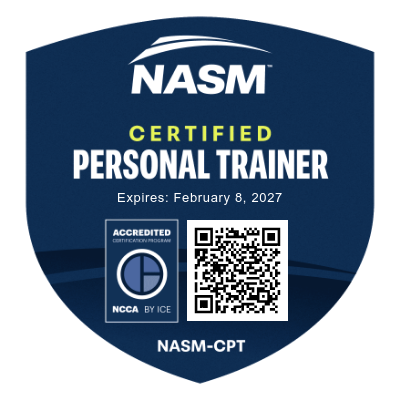
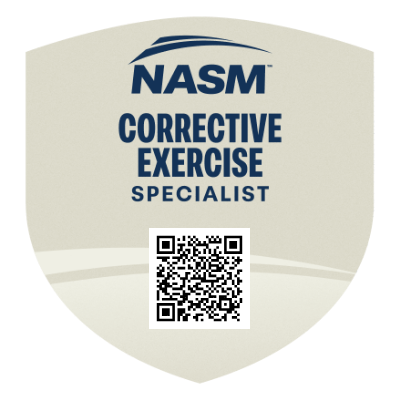
Certified through nationally recognized, NCCA-accredited organizations with a focus on corrective exercise, strength training, and coaching women safely through body change.

Corrective & Strength Training
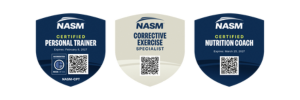
NCCA accreditation NASM Certified Personal Trainer (CPT), Corrective Exercise Specialist (CES), TRX Suspension Training
Pilates & Mind-Body Training
ISSA Certified Pilates Instructor, TRX Pilates
Weight Loss & Metabolic Education
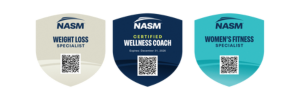
NASM Weight Loss Specialist, Women’s Fitness Specialist, Understanding Weight Loss Medications
Coaching & Safety
NASM Certified Nutrition Coach (CNC), Certified Wellness Coach (CWC), CPR/AED
Certified through nationally recognized, NCCA-accredited organizations with a focus on corrective exercise, strength training, and coaching women safely through body change.

Corrective & Strength Training
NCCA accreditation NASM Certified Personal Trainer (CPT), Corrective Exercise Specialist (CES), TRX Suspension Training
Pilates & Mind-Body Training
ISSA Certified Pilates Instructor, TRX Pilates
Weight Loss & Metabolic Education
NASM Weight Loss Specialist, Women’s Fitness Specialist, Understanding Weight Loss Medications
Coaching & Safety
NASM Certified Nutrition Coach (CNC), Certified Wellness Coach (CWC), CPR/AED
Share a bit about where you are so I can meet you there with the right kind of training support.
Form-focused. Emotionally aware. Personalized support from the comfort of your home.
I believe you should be able to understand the cost of private training before deciding whether you’d like to work with me. Below, you’ll find pricing for my 30-minute private training option. Additional options are available based on session length, frequency, and the level of support you’re looking for.
Private, 1:1 via Zoom
• Best Value • One-Time Payment | • Includes 30-day satisfaction guarantee
Three automatic installments
• Best Value • One-Time Payment | • Includes 30-day satisfaction guarantee
Three automatic installments
After your final session of the week, I would be so grateful if you could check in.
Your answers help me plan your training based on how your body responded this week.
This should take less than a minute to complete.
Thank you for taking the time to complete this form. I appreciate your feedback and the trust you placed in Seventh Remedy.
Your words help me continue improving my services and may help another woman feel more comfortable taking the next step.
Here’s to feeling your best,
Claudia
Understand Your Heart Rate Zones
Estimate your heart rate zones and learn what each effort level should actually feel like.
Heart rate zones can help you understand how hard your body is working during cardio, walking, strength circuits, or conditioning. But heart rate is only one way to measure intensity. Your heart rate can be affected by sleep, stress, hydration, medication, caffeine, fitness level, and even the temperature in the room.
This calculator gives you an estimate that you can compare with your breathing, talk test, and rate of perceived exertion (RPE) so you can understand effort in a more practical way.
Use heart rate as a guide. If your smartwatch or fitness device says one thing but your body says something else, pay attention.
Check in with yourself and ask:
Age (years)
These numbers are estimates. Use them with your breathing, talk test, and RPE. Heart rate can change with stress, sleep, hydration, caffeine, medication, temperature, and fitness level.
Your body uses both fat and glucose for energy all day long. It is never only burning one type of fuel. At lower intensities, your body can rely more on oxygen and fat because the pace is steady. As effort gets harder, your body leans more on glucose because it needs energy faster. One zone is not better than another. They simply train different systems depending on your goals.
This tool is for education only. It does not diagnose, prescribe exercise intensity, or replace guidance from your medical team. If you take medication that affects heart rate or have cardiovascular concerns, ask your medical provider what intensity range is appropriate for you.
(Find out in less than 1 minute!)
Answer a few quick questions about how your body feels and how you like to exercise. This will help you see if The Remedy Method, which blends corrective exercise, Pilates-style control, and strength training for women on GLP-1 medications, is a good fit for you.
A quick check-in on your last meal and today’s patterns so you can see what your body might be asking for next.
Use this tool to look at your Body Mass Index (BMI) and waist size.
BMI compares your height and weight to estimate general body size. It does not measure fat or muscle and cannot show how your body is changing with strength training or GLP-1 use. It is simply a numerical estimate.
Waist size provides additional information because abdominal fat is more closely linked to metabolic risk than fat stored in other areas. Measuring the waist gives a better idea of where the body is holding weight.
Both BMI and waist size can change quickly when someone starts a GLP-1. Muscle, water, and fat often shift at different rates, so these numbers work best as general reference points rather than something to obsess over.
This tool gives you a simple snapshot you can use for your own self-awareness or just to know before doctor’s appointments. It’s one of several things to pay attention to, along with movement quality, strength levels, recovery, and daily well-being.
Waist size is optional. The tool will still calculate your BMI if you skip that section.
BMI Categories:
Unit of measure
Sex
Age (years)
Height (feet)
Height (inches)
Weight (pounds)
Waist circumference (inches, optional)
Height (cm)
Weight (kg)
Waist circumference (cm, optional)
Please keep in mind that these numbers simply give you a general snapshot. They do not measure muscle, fitness level, or how your body is changing with strength training or GLP-1 use. They are just reference points you can pair with how you feel, how you move, and what you discuss with your medical team.
This tool is for education only. It cannot diagnose medical conditions. If you have new symptoms or health concerns, talk with your medical team for guidance. For adults only. BMI is one data point and does not reflect muscle, body composition changes on GLP-1s, or overall health.
(Find out in less than 1 minute!)
Answer these questions about how your body feels today. This tool helps you find a safe starting point for key movement patterns if you are using GLP-1 medications or coming back to exercise after weight loss. The goal is to match your body to the right level of support, not to push through pain or fear.
1. How do your knees feel when you walk, use stairs, or stand up from a chair?
2. How does your low back feel today?
3. How steady do you feel on your feet?
4. Can you safely get down to the floor and back up on your own?
5. Any foot or ankle pain when you walk or stand?
6. Right now, how confident do you feel about moving your body?
This tool is for education only. It cannot diagnose injuries. If you have strong pain, falls, or new symptoms, talk with your health care team before starting or changing your exercise plan.
Many women notice changes in balance, coordination, and strength as they lose weight. This tool helps you choose movements that feel supportive instead of stressful, so you can build confidence and avoid overloading joints or overworking muscles that are still adjusting.
1. Have you eaten a small meal or snack in the last 2 to 3 hours?
2. How is your stomach right now?
3. How is your energy right now on a scale from 1 to 10?
4. Have you felt dizzy, faint, or lightheaded when you stand up today?
5. Any new sharp pain, chest tightness, or trouble breathing since your last workout?
This tool is for education only and does not replace medical advice. If you ever feel unsure, choose rest and contact your health care team.
First, calculate your daily protein target using the protein calculator.
Then enter your maintenance calories from the TDEE calculator, or type in a starting estimate, and choose your goal. This calculator adjusts your calories based on that goal and shows you how those calories break down into protein, fats, and carbohydrates. This is called a macro split.
For women using GLP-1 medications or going through weight loss, this structure is designed to make eating feel more manageable. Protein supports muscle. Fats support hormones and nutrient absorption. Carbohydrates support energy, movement, and recovery.
Protein recommendations online can be confusing because the official Recommended Dietary Allowance (RDA) is designed to prevent deficiency, not necessarily support muscle retention during weight loss. The RDA for protein is 0.8 grams per kilogram of body weight, but many experts recommend closer to 1.2–1.6 g/kg during weight loss or resistance training. That is why our Daily Protein Target Calculator starts at 1.2 g/kg.
Fat intake is usually recommended as a percentage of total calories rather than a fixed number. For most adults, about 20% to 35% of daily calories coming from fat is considered a balanced range. This calculator keeps fats within a moderate range while balancing protein and carbohydrates based on your calorie needs and goal.
Carbohydrates help support energy, movement, recovery, and brain function. General nutrition guidelines often place carbohydrate intake within a broad range depending on activity level and calorie needs. Instead of using a rigid percentage, this calculator adjusts carbohydrates based on your calorie intake, protein target, and fat needs while maintaining a minimum intake for daily function and energy levels. However, carbohydrate needs can still vary widely depending on activity level, appetite, medications, and overall calorie intake.
Your protein target comes directly from the protein calculator. This tool builds the rest of your intake around that number.
Please note: If you choose Body Recomposition (losing fat and building muscle), the calculator uses a smaller calorie reduction than the Fat loss setting. This provides more energy for strength training and recovery while still creating a modest starting deficit. Building muscle while losing fat is possible, but results will depend on your resistance training, protein intake, recovery, starting point, and actual calorie intake. The calculator provides a starting structure rather than guaranteeing that both changes will happen at the same rate.
Use your TDEE number from the TDEE calculator or enter a starting maintenance estimate.
This calculator will adjust that number based on your goal before splitting your macros.
Use my TDEE Calculation
Adjusted calories: 0 kcal per day
Protein: 0 g per day
Fat: 0 g per day
Carbs: 0 g per day
This is a starting point, not a prescription. Your medical team may adjust your needs based on your health, labs, and medication plan.
Enter your weight and choose how often you strength train. This calculator gives you a daily protein range in grams to help support muscle, recovery, and overall health.
The Recommended Dietary Allowance (RDA) for protein is 0.8 grams per kilogram of body weight. That amount is the minimum needed for basic health, not for maintaining muscle during weight loss or training.
People may need more than the RDA when they are:
This calculator starts at 1.2 grams per kilogram. Think of this as your baseline for muscle protection, not a goal you have to exceed. The range increases slightly based on how often you train. This reflects what your body could use if it is supported with enough food and recovery.
Because appetite can be lower on GLP-1 medications, you do not need to chase the highest number in the range. Start with the lower end of your range and focus on consistency first. If your appetite allows and your body is responding well, you can gradually work toward the higher end. If not, staying at the lower end is still effective for protecting muscle.
Recommended range:
0 to 0 grams per day
This range is an estimate based on body weight and strength training level. It is a guide, not a strict rule. Your medical team may adjust your protein needs, especially while you are on GLP-1 medication.
Fill in your details to find your Total Daily Energy Expenditure (TDEE) and Basal Metabolic Rate (BMR).
Your TDEE is the total amount of energy your body uses in a full day. This includes everything. Your workouts, walking, cleaning, daily movement, shifting posture, fidgeting, and even the energy it takes to digest your food.
Part of your TDEE is your BMR. Your BMR is the energy your body needs for basic life functions like breathing, circulating blood, maintaining organs, and keeping your body temperature stable. This is what your body would use even if you stayed in bed all day.
Understanding both numbers is helpful if you are on a GLP-1 or working on your health. Appetite can drop quickly, which makes it easy to undereat without noticing. Knowing your TDEE and BMR shows you how much fuel your body actually needs so you can keep your energy up, protect muscle, and support safe and steady fat loss.
You can choose from three formulas to calculate these numbers. Mifflin-St. Jeor and Harris-Benedict use height, weight, age, and sex. Katch-McArdle uses body fat percentage if you know it. They use slightly different math equations, but they all estimate the same thing. Mifflin-St. Jeor is generally the most accurate for most people.
BMR: 0 kcal per day
TDEE: 0 kcal per day
These are estimates. Calculators may read low for people with more muscle and may not work well for people living with obesity. Use as a guide, not an exact number.