
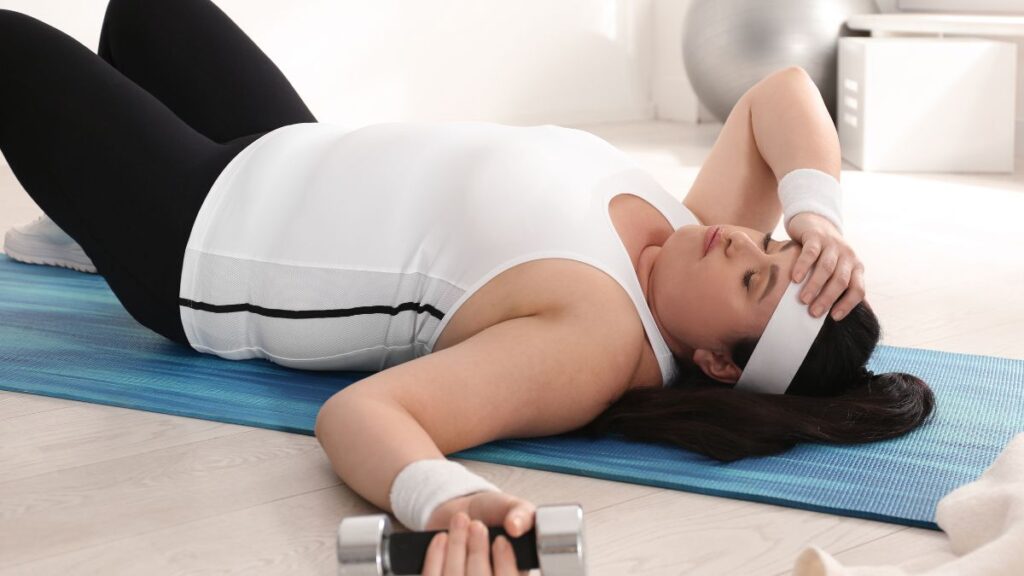
Most traditional workout programs were designed for gradual, lifestyle-based weight loss of about half a pound to one or two pounds per week. GLP-1 medications can create faster shifts for many women, even when providers aim for slower, steady loss. Those shifts aren’t just cosmetic. They influence how your muscles, joints, and nervous system handle movement.
When weight loss happens this fast, people naturally worry about losing muscle. That is why many programs that say they are for women on GLP-1s focus almost entirely on preventing muscle loss. It is an important goal since muscles play a big role in strength, health, and long-term support.
But recent studies1 on GLP-1 medications like semaglutide and tirzepatide show that a good amount of the weight you lose is coming from fat, and that lean mass can be preserved more than doctors first expected, especially when exercise and proper nutrition are part of your routine. That is good news because even if some muscle is lost, it may not be happening as quickly or as severely as once thought. How much you keep often comes down to staying consistent with strength training and eating enough protein. If you are unsure what your protein goal should be, this calculator can help you find a starting point.
But even with that good news, muscle is only part of the story. Fast progress can also affect how steady you feel, how coordinated you are, and how well your muscles actually work together. So we do not just want to keep the muscles you have. We need to make sure those muscles are firing at the right time and supporting your movement the way they are supposed to.
That is why movement control needs attention right alongside strength. If we skip that part, we miss the part of training that actually helps your body adjust to the new demands you are placing on it.
Why Traditional Training Falls Short
You may look and feel completely different, but your body does not automatically know how to move in this new version of you. The way you stand, walk, climb stairs, bend, balance, and carry your weight were habits your body learned a long time ago. Those patterns do not disappear just because the weight is gone, so your body keeps using them even if they no longer match the way you are built now.
Here’s what you might notice:
Your knees drift inward or your ankles feel unsteady during normal activities. This did not suddenly start after weight loss. When you carried more weight, your hips often rotated inward to help you stay stable, and your knees followed that angle. Your body still uses that same strategy, even though it no longer needs to. The muscles that pull the legs inward jump in first, and the ones that steady the legs have not learned to take over yet.
Why it matters: This makes your lower body work harder than it should. It can lead to knee pain, hip pain, rolling ankles, and feeling wobbly during workouts or even simple things like stepping off a curb.
Your feet feel flatter or less supportive when you stand or walk for long periods. Shifting weight onto the inside edges of your feet was your body’s way of keeping you from tipping or losing balance. Over time, that pattern lowered the arches and trained the ankles to roll inward. Still, your feet remember that old stabilizing method, even though your body has changed now.
Why it matters: When your feet don’t support you well, your whole body has to compensate. Your ankles, knees, hips, and even your low back start picking up the slack. This can lead to tired feet, achy ankles, shin pain, knee discomfort, low back pain, and feeling like you can’t balance or push off the ground the way you used to.
Your shoulders round or your head shifts forward. These patterns usually come from everyday habits like sitting, scrolling, or breathing high into the neck. They also become stronger when the upper body carries more weight because the body leans on those same patterns to stay balanced.
Why it matters: This puts extra strain on your neck and upper back, which can lead to headaches, tight shoulders, and difficulty holding yourself upright comfortably.
Your breathing stays shallow or high in your chest. If your body learned to breathe mostly into the upper chest, especially when carrying more weight around the midsection, that pattern stays in place. Fast changes don’t automatically teach the diaphragm and core to pick up their roles again, so your shoulders and neck end up doing more of the work. This can make taking a breath feel tense, tight, rushed, or less steady than it should.
Why it matters: This makes daily movement and exercise feel harder because your breath isn’t supporting you. You may feel winded faster or notice your core feels weak or disconnected.
Everyday movements feel slightly awkward or “off.”
Your brain is still sending movement signals based on your old body. The muscles that used to take on most of the workload still jump in first. The stabilizers that create smooth, controlled movement have not caught up yet.
Why it matters: This can make simple tasks feel harder than they should, slow your progress, and make workouts feel discouraging or uncomfortable.
Try this: The next time you stand up from a chair, pay attention to how you feel and what your body is doing. If your knees cave in or your feet roll inward, it’s most likely because the muscles that should guide the movement, like your glutes (butt) and outer thighs aren’t firing on time yet. When you were carrying more weight, your body learned to stand up by shifting inward through the feet, leaning forward, or using your hands or the chair arm for support. That pattern becomes automatic over time.
When that happens, you can’t push through your heels the way you’re supposed to, so your knees and ankles end up absorbing the pressure instead of being supported by your hips.
You’ve stood up thousands of times, but your body is still following the old strategy even though your structure has changed.
This is the gap most strength programs miss. They progress the exercises, but the body is still moving on outdated instructions.
How The Remedy Method Helps Your Body Relearn Movement
The Remedy Method isn’t a trend or a quick rebrand of an existing program. It was designed exclusively for women navigating fast, GLP-1-driven body changes, and it reflects what your body actually needs during this transition. It’s grounded in science, real client results, and the biomechanics behind how your body stabilizes, moves, and adapts as weight comes off.
The Remedy Method follows a clear structure:
- Regain control
- Build stability
- Add strength
Here’s the logic behind it:
- Wake up the muscles that have been quiet
- Calm down the muscles that are doing too much
- Rewire how your body organizes movement
- Add resistance once your joints and patterns are ready
We do this by blending three key elements:
- Corrective activation
- Pilates-based control to improve stability and awareness
- Strategic strength progressions
You aren’t doing “regular Pilates” or “regular strength training.” You’re addressing the physiological realities your body is living with right now.
Each phase supports the next. Nothing is random. Every exercise has a purpose and a big part of that purpose is the slower, intentional pace built into the method. Slow work challenges the muscles without overloading the joints. It removes momentum, increases time under tension, and gives your nervous system space to relearn each movement with accuracy. It also exposes weak links, improves awareness, and protects your body during rapid changes.
You don’t need heavy weights or complicated equipment. Everything can be done at home, and the results carry into every movement you make throughout the day.
Why Traditional Programs Miss the Mark for Women on GLP-1s
A lot of the programs out there today are designed for the average client. They focus on load, volume, and intensity without adjusting for shifts in balance, posture, joint stress, muscle sequencing, GI discomfort, and energy levels. None of that is “bad.” It just isn’t built for what your body is going through right now.
Women on GLP-1s usually don’t benefit from:
- random high-intensity workouts
- generic ab circuits
- YouTube follow-along videos
- cardio-heavy programs
These workouts aren’t harmful, but they skip the reset your body needs first.
What works better is a structure that follows:
- stability – activation – strength
- fix alignment first before adding heavy weights
- slower tempo work
- targeted activation of the hips, core, and shoulder stabilizers
- gradual progression that protects joints and tendons
This is the backbone of The Remedy Method.
You Don’t Have to Quit Everything Else You Enjoy
If you’re already exercising and you enjoy it, keep moving. Walking, group classes, yoga, gym workouts… all movement is good for your health, mood, and confidence.
The Remedy Method isn’t here to replace everything you do.
It’s here to support the changes your body is going through right now so you can feel better in any activity you choose.
Think of it this way: You’re not “doing exercise wrong.” Your body just needs a short period to reset so you can feel stronger, safer, and more coordinated in whatever movement you love, now and long-term.
The Remedy Method gives you the foundation first, so you can add anything else on top with confidence.
Train for the Body You’re Living in Today
Your body is adapting quickly. It deserves a training method built for that.
The Remedy Method is:
- Designed specifically for the movement challenges women face on GLP-1s
- Grounded in neuromuscular science, not fitness trends
- Focused on retraining the body to move well, so strength lasts
When the plan matches your physiology, progress feels steady and realistic instead of forced. You don’t have to figure it out alone. You just need a clear method that supports the body you’re working with today.
If you’re ready to train in a way that fits how your body is changing, reach out to start the conversation.
Or if you just want to see if The Remedy Method makes sense, you can take this 60 second quiz.
Want to See a Sample of The Remedy Method?
If you want to see what structured, GLP-1-specific training feels like, I put together a complimentary Confidence on GLP-1s Glute-Focused Workout Plan. It’s not a standalone “glute day,” but a small snapshot of how progressions work inside The Remedy Method. In a full program, I’d blend a few of these movements into a complete full-body plan. I chose to focus on the glutes here because they support balance, knee alignment, hip stability, and confident movement during fast weight loss. This short progression uses slow tempo, precise foot placement, and controlled movement to help your body rebuild stability. It’s beginner-friendly, joint-safe, and fully at home.
How to Use This Progression
This isn’t a one-day challenge. It’s a gradual progression designed to help your body learn control first, then build strength over six weeks. Make sure to warm up lightly and cool down after each session. You can layer this into any program you’re already doing.
Phase One: Weeks 1–2: Build Connection
- Start practicing the following exercises:
- Mini Good Morning
- Standing Glute Squeeze with March
- Standing Posterior Tilt Press
- Perform each for 20–30 seconds, rest for 30 seconds between exercises, then repeat once for two total rounds of each exercise.
- Focus on form and how your glutes feel engaging. Don’t rush. This is slow and controlled.
Phase Two: Weeks 3–4: Add Control
- Continue to the next series of exercises. You can perform them separately or layer them with the previous phase:
- Glute Bridge with Heel Dig
- Glute Bridge Hold
- Glute Bridge March
- Perform each for 30–40 seconds, rest for 20 seconds between exercises, then repeat for two or three total rounds of each exercise.
- Option: add a Pilates or mini ball for a stability challenge.
Phase Three: Weeks 5–6: Strength and Endurance
- Transition into the final phase. You can perform these on their own or layer them with the earlier phases to build a full, glute-focused workout:
- Heel-Connected Dumbbell Bridge Press
- Glute Bridge with Pulse Up and Out
- Glute Bridge with Single-Leg Lifts
- Perform each for 40–50 seconds, rest for 10 seconds between exercises, then repeat for three total rounds of each exercise.
- Keep the tempo slow and focus on control and even weight through both feet.
Tip: If you’re newer to movement or returning after time off, stay at each phase longer than two weeks. You’re building strength that lasts, not chasing soreness or speed. As your body learns each phase, you’ll start feeling stronger glute activation in everyday movement: walking, climbing stairs, and even standing taller.
Resources
- Sage Journals | Preservation of lean soft tissue during weight loss induced by GLP-1 and GLP-1/GIP receptor agonists: A case series | https://journals.sagepub.com/doi/10.1177/2050313X251388724 or Tinsley GM, Nadolsky S. Preservation of lean soft tissue during weight loss induced by GLP-1 and GLP-1/GIP receptor agonists: A case series. SAGE Open Med Case Rep. 2025 Oct 16;13:2050313X251388724. doi: 10.1177/2050313X251388724. PMID: 41122508; PMCID: PMC12536186. https://pmc.ncbi.nlm.nih.gov/articles/PMC12536186/ ↩︎
Photo Credits
Online TV Home Fitness Workout by Andrey Popov from Getty Images
Woman Resting by Africa images

GLP-1 medications have made weight loss feel...

Have you ever finished a full meal and still felt...
You’ve probably seen something like this floating...

When you start taking better care of your mind or...

Losing weight is a major accomplishment. But even...