
The decision to stay on GLP-1s, adjust your dose, or come off completely is yours and yours alone. It’s a choice to make with your doctor, not anyone else. Not a trainer, not a dietitian, not the internet. You get to decide what’s right for your body and your future.
But, if you ever decide to stop, it helps to know what actually happens inside your body when the medication ends, and what you can do to stay steady through it.
How the Body Gets Out of Balance
Weight gain usually builds gradually over time, and it is rarely caused by one single habit or one big event. It’s the slow stacking of stressors over months or years. Genetics definitely contribute (they account for roughly 40–70% of differences in body weight), but the modern environment we live in doesn’t do much to help either. Things like chronic stress, poor sleep, emotional strain, medications, and highly processed foods don’t just affect willpower or behavior; they actually interfere with how the body regulates hunger, fullness, and how it uses fuel from the foods we eat. When those signals are disrupted long enough, the system starts to drift. Over time, the body adapts to that environment, and the systems meant to keep things balanced stop working the way they originally did.
When Energy Storage Stops Working Both Ways
The body runs on energy from food. If you take in more energy than your body needs to function or use right away, the extra gets stored, mostly as body fat. That stored fat isn’t a problem by itself. It’s meant to be there. It’s supposed to be used later to fuel you between meals or when energy demands go up, like during exercise.
In a healthy system, the body can move back and forth between storing energy and releasing it without much trouble. It stores when it needs to. It releases when it needs to. That flexibility is what keeps things balanced.
What Changes in Obesity
For someone living with obesity, that flexibility starts to break down. Hunger hormones like ghrelin stay elevated, so the body keeps asking for more food even when there is already plenty of stored energy available. What makes this especially confusing is that the hormones that signal fullness, like leptin and Glucagon-Like Peptide-1 (GLP-1), are still being released. The problem isn’t that they are missing, but that the brain doesn’t respond to them the same way it once did. The signals are there; they’re just not being received clearly.
As a result, you can feel hungry soon after eating and rarely feel truly full or satisfied, even when your body has already had enough. This creates a strange mismatch. The body can carry a large amount of stored energy in the form of body fat, yet behave as if it’s running low.
Why the Body Starts Working Against You
As that mismatch continues, the body starts to adapt in ways that are meant to protect you but end up working against you. From an evolutionary standpoint, this made sense. Storing extra body fat used to be life-saving when starvation was common and food access was unpredictable. The body learned to defend its energy stores at all costs.
Today, food is generally available, and most people move far less than their ancestors ever did. With more stored energy and less movement, resting energy burn gradually drops. The body uses fewer calories just to function. Cravings for quick, calorie-dense foods increase. Fat is stored more easily, and once it’s stored, it becomes harder to access and use.
In a healthy system, body fat can be broken down and released for fuel when needed. When metabolic dysfunction develops, that release process becomes impaired. The energy is there, but the body struggles to tap into it, and the system stays stuck in storage mode instead of balance.
When Fat Tissue Changes the System
Body fat is not just stored energy, the way we once thought. It behaves more like an active organ. As fat mass increases, fat cells begin releasing inflammatory signals that interfere with insulin and other key metabolic processes. They also disrupt enzymes that are responsible for breaking down stored fat, including a really important one called hormone-sensitive lipase. When those enzymes don’t respond the way they should, the body has a harder time pulling energy out of its own fat stores.
This creates a frustrating situation. Even if someone eats less or exercises more, the body struggles to access the energy it already has. From the brain’s point of view, this feels unsafe. Energy feels unreliable. And when the body senses that kind of “danger” or uncertainty, it responds by holding on tighter, instead of letting go.
This is why obesity is not just “extra weight.” It is a metabolic state. The brain, gut, hormones, and fat tissue are no longer working together in a coordinated way. Hunger stays elevated and energy use slows down. Weight loss efforts meet resistance, not because someone isn’t trying hard enough, but because the system itself has changed.
What GLP-1s Do While You’re Taking Them
GLP-1s medications work by copying a hormone your gut already releases after you eat. That hormone helps organize how your body handles food and energy. It supports insulin release, slows how quickly food leaves the stomach so you feel full longer, and sends stronger, clearer, and more effective signals to the brain that help you feel satisfied instead of constantly hungry.
But the bigger change happens deeper than appetite alone. GLP-1s help restore communication across systems that have been out of sync for a long time. Because fat cells in obesity are already inflamed and defensive, restoring that balance matters.
As inflammation and resistance ease, fat cells become less defensive. Stored energy becomes more available. The body doesn’t feel like it has to protect every calorie so aggressively.
For many people, this is the first time their system stops fighting back. Appetite feels quieter. Cravings lose their urgency. Eating less no longer feels like constant deprivation. Not because discipline suddenly improved, but because the body finally feels safer using what it already has.
That shift is important because it allows other strategies to work the way they were always supposed to. Nutrition, movement, and strength training don’t get replaced by the medication. The medication makes the body responsive to them again.
At the same time, weight loss on GLP-1s doesn’t come only from body fat. Some lean muscle can be lost as well. That’s why strength training matters during this phase. It gives the body a reason to preserve muscle, stay strong and functional as weight drops.
A Realistic Look at Weight Regain After GLP-1s
When you stop taking a GLP-1, your body needs time to find its balance again. It’s been getting extra help managing hunger, fullness, and energy use, so once that help is gone, it takes a while to adjust. That transition can be bumpy, causing you to regain some of the weight you lost.1
This is common, even when you keep healthy habits in place. That doesn’t mean you failed or that everything you did while on the medication didn’t matter. It simply means your body is learning to handle appetite, fullness, and metabolism on its own again.
Here’s what happens:
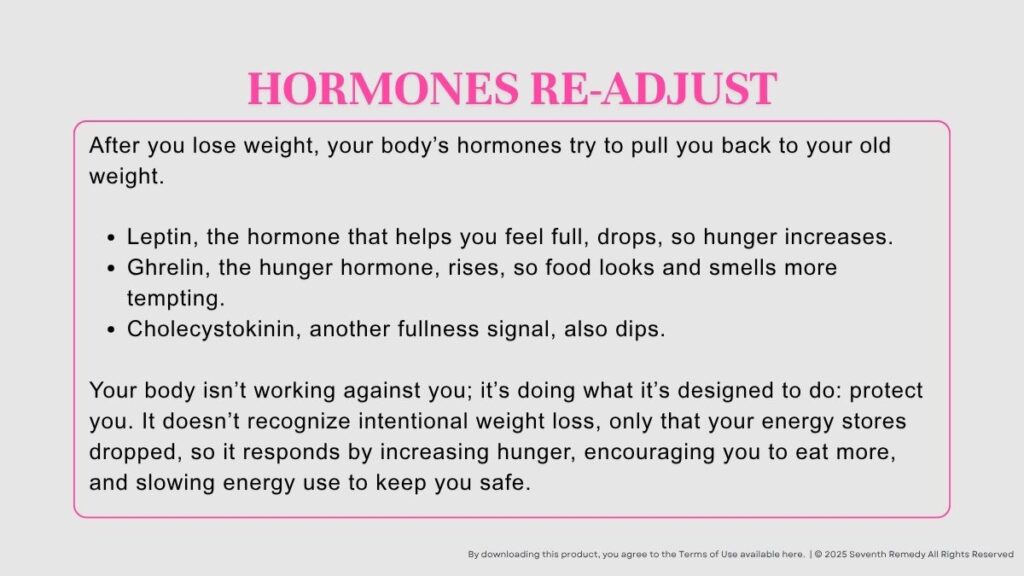
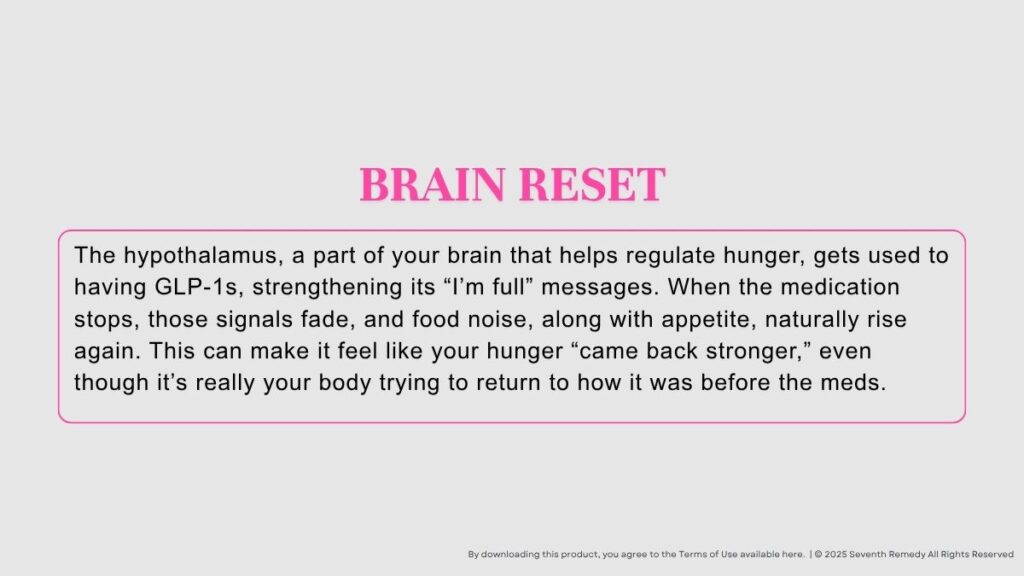
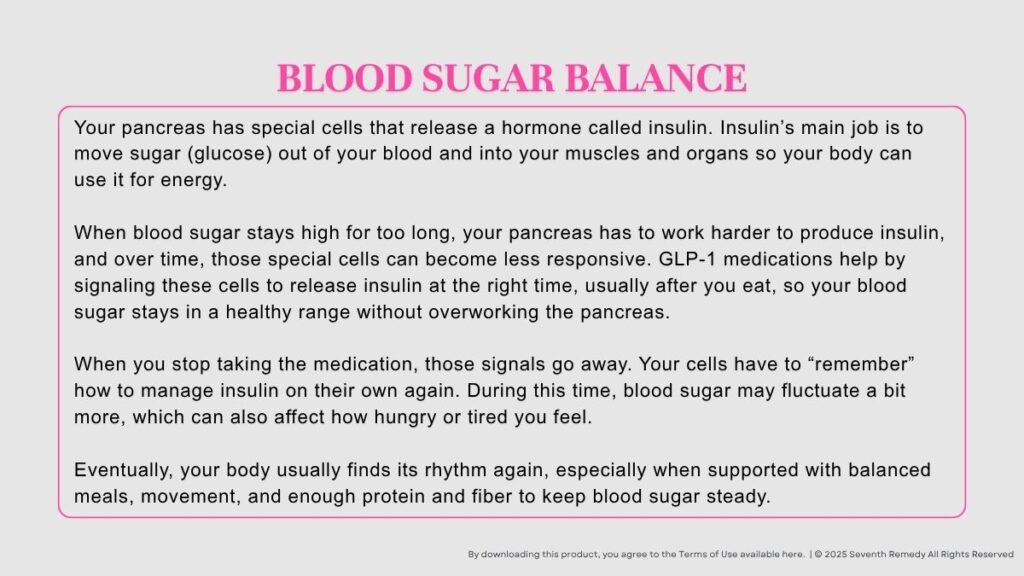
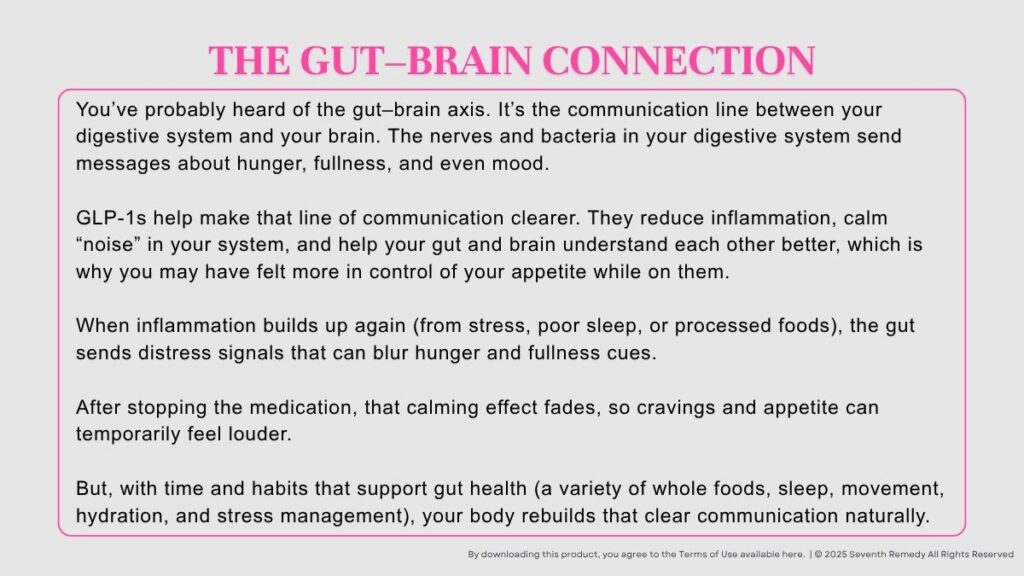
None of these changes means weight regain is guaranteed; they just explain why your body might feel different for a while.
How to Support Your Body Before, During, and After GLP-1s
GLP-1s are extremely helpful, but your body still needs to know how to stand on its own. What you do before, during, and after the meds is what teaches it that.
Before
This is the time to get to know your body, not fix it.
Start by noticing what makes you tired. Track your sleep for a week by writing down what time you go to bed, when you wake up, and how rested you feel. Then look at what happens on days you do not sleep well. Do you snack more? Feel hungrier? Get irritated faster?
Pay attention to your movement too. How often do you get up during the day? Did you clean, take the stairs, walk the dog, or sit most of the day? None of it is good or bad; it is just information. Once you see your normal patterns, you can start adjusting one small thing at a time and notice how it changes how you feel.
Pick something simple. Go to bed and wake up at the same time twice this week. Add a source of protein to one meal or snack each day. See if you have more energy for a short walk on your lunch break or after dinner.
And when you eat, slow down enough to notice the meal. If you usually eat while watching TV, try sitting at a table and setting your fork down between bites. See if you can tell the difference between being satisfied and being full. Download this hunger scale and aim for a 4-5 before and during your meal.
These are the kinds of habits that prepare your metabolism for what is ahead, the ones that help your hunger cues stay steady once the medication starts doing its part.
During
This is your body’s reset phase.
Your appetite will likely be smaller, and that can feel like a relief, but it is also when the real work begins. While the medication is lowering inflammation and improving how your body handles insulin (the hormone that helps control blood sugar) and leptin (the hormone that helps signal fullness), you have a window to rebuild your habits from the inside out.
What you do now matters for what happens later. When calories drop too low or protein is skipped, your body starts using muscle for energy. Muscle is what keeps your metabolism strong and steady, so this is the time to protect it. Keep moving, even if it is light strength training or resistance bands at home. Each session teaches your body to hold on to muscle instead of letting it go.
Food matters too. This is the perfect time to retrain your taste buds and reintroduce real food. Try adding more whole, nutrient-dense meals with protein, fruits, and vegetables. Learn how to season and prepare foods that you actually enjoy. The more you do this now, the more natural it will feel when your appetite returns later.
Do not skip meals just because you can. This might be a great time to set an eating schedule. This way, your body will learn when to expect food, even if you are not hungry; your body still needs nutrients to stay in balance. Think of this phase as teaching your metabolism how to eat well again, so it can stay calm and efficient when the medication ends.

After
When hunger and food noise return, it can feel like a betrayal, but it is just your body waking up. The goal is not to shut it down again. It is to manage it differently this time.
Now is when everything you practiced starts to matter. Keep eating real, whole foods and enough of them. Your body needs meals with protein, fruits, and vegetables to remind your metabolism that food is readily available. If you eat too little or try to “make up” for hunger, your body will hold on to energy instead of using it.
Treat your body like the luxury it is. Feed it like a five-star resort, not a rest stop. The more you choose real food, the more your taste buds adjust, and the easier it becomes to crave what truly nourishes you.
Fueling up on protein and fiber will also help reduce any cravings for sweets, but do not be afraid to have dessert once in a while. It is the habits, not one meal, that shape your progress.
Stay active in ways that feel fun and doable. Strength training helps your muscles stay strong, but everyday movement counts too. Stretch, garden, walk your dog, play with your kids, or take the stairs. These small things remind your body that it can stay balanced without the medication’s help.
Note: Hunger and food noise are two different things. Hunger is your body’s physical need for food, while food noise is the constant thoughts about eating. Both can return, but are manageable, as your natural signals restart.
Coming Off a GLP-1 Is Not About Starting Over
It’s about continuing the work your body has already begun. The same habits that helped you make progress are the ones that will help you keep it. Strength training, balanced meals, enough protein, and paying attention to your hunger cues are what keep your metabolism steady.
Whether you choose to stay on GLP-1s or come off completely, this part of the process is still yours. Some weight may come back, and that’s normal. What matters most is staying connected to your routine and supporting your body instead of reacting to the scale. Every step, every meal, and every workout is your body learning how to live in balance again.
Notice the moments that feel good, even when you’re tempted to focus on what isn’t perfect. Keep reminding yourself why you wanted to feel healthier in the first place.
You’ve already done the hardest part. Now the goal is to make it last in a way that feels strong, steady, and sustainable. Keep showing up for yourself because you deserve that.
When you’re ready for extra support, I offer personalized virtual training for women using or transitioning off GLP-1s. Together, we focus on strength, stability, and long-term results. Click here to learn more.
Resource
- Abdullah Bin Ahmed I. A Comprehensive Review on Weight Gain following Discontinuation of Glucagon-Like Peptide-1 Receptor Agonists for Obesity. J Obes. 2024 May 10;2024:8056440. doi: 10.1155/2024/8056440. PMID: 38765635; PMCID: PMC11101251. https://pmc.ncbi.nlm.nih.gov/articles/PMC11101251/ ↩︎
Photo Credits
Home workout by Mixetto from Getty Images Signature
Fitness trainer conducting a virtual session on a laptop by Arsenii Palivoda from Getty Images


Walking seems to be trending lately, but for women...
Your body uses energy every minute of the day...


There’s a lot of noise out there about GLP-1 meds...
Being fit and balanced doesn’t mean extreme. It’s...