Workouts Feel Harder and Recovery Slows When You’re Not Eating Enough on GLP-1

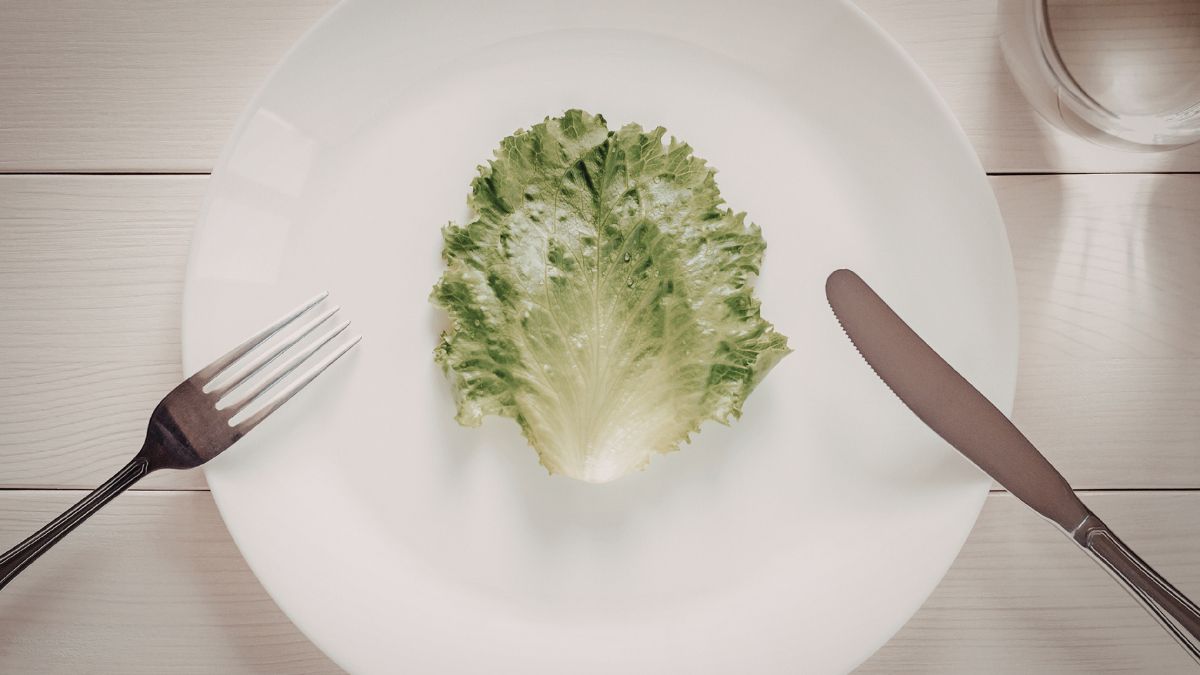
Single leaf of lettuce on a plate

Women start GLP-1, their appetite drops, and for the first time in a long time, things start to change. Weight begins to come down, and adding exercise starts to feel like the next right step.

But at the same time, eating becomes harder. You get full quickly, food doesn’t sound good, and some days you barely eat without even realizing it.

So now you’re trying to exercise in a body that’s taking in very little, and that changes how your body responds in ways you may not even realize.


What Happens When You’re Not Eating Enough

Your body is super smart.

When you’re not eating enough, it has to make decisions with what it has. And if it doesn’t have much, it will always take care of what you need to get through the day first.

So things like having enough energy to think clearly, move around, and keep your body functioning all come first.

It’s sort of like, if you had a limited amount of money and a list of bills, you would pay the ones that keep you safe first. That might mean your mortgage or rent, heat or electricity, and food. Other things, like painting the kitchen, retiling the bathroom, or replacing something that’s broken, might have to wait.

How Your Body Decides What Comes First

There is a concept called triage theory1, introduced by researcher Bruce Ames. It basically says that when there aren’t enough vitamins and minerals coming in from food, your body “pays” for the most important things first, like keeping your organs working and your brain alert. These are the things that keep you alive. If those aren’t functioning well, nothing else really matters.

So things like building muscle, repairing connective tissue like tendons and ligaments, supporting your hair and skin, or even keeping you warm are not urgent in that moment, and they get pushed down the list.

That’s why you might notice things like:

  • feeling cold all the time
  • being super tired or having brain fog
  • your hair shedding or feeling thinner than usual
  • workouts (even short ones) feeling harder than they should

If you’re not getting enough from food, strength and recovery start to feel slower, inconsistent, or harder than expected. This happens because your body is choosing where to spend what little it has.

Only after your basic needs are covered and if it has enough material, does your body put time and energy into repairing and rebuilding muscle and connective tissue after exercise.

Health - words from wooden blocks

What Your Body Needs to Rebuild

For your body to actually repair and rebuild after a workout, it needs a few key things from food.

First: Protein.

Big surprise, I know. But this is also the one most women struggle with on GLP-1. The smell, the texture, even the thought of it can feel like too much some days.

The reason it matters so much is because protein is what your body actually uses to repair muscle after you exercise.

When you work out, you’re creating small amounts of stress in the muscle. Protein helps your body go in and rebuild that area so it’s a little stronger the next time.

If there isn’t enough protein coming in, that repair process is limited. So even if you’re showing up and doing the workouts, your body doesn’t have what it needs to follow through on them.

This doesn’t mean you need to eat a large amount all at once. Even small amounts, consistently, can start to make a difference.

This can come from foods like:

  • rotisserie or grilled chicken with a little feta (kabobs work really well here because they’re already in small pieces you can grab and eat slowly)
  • a small or half serving of baked or broiled fish with lemon and olive oil
  • hard boiled, poached, or scrambled eggs with a spoonful of cottage cheese
  • Greek yogurt with honey and berries (a couple of spoonful’s at time is okay)
  • a small bean and corn salad with a little salsa

Enough food overall.

Not just protein, but enough food in general so your body has the energy to actually carry out that repair. Because even if you’re eating some protein, your body still needs energy to use it.

This is where carbs and fats come in. They help fuel your body so it has the energy to support both your workouts and your recovery after.

Things like these all play a role here:

  • Spanish rice
  • baked potatoes
  • fresh or frozen fruit
  • olive oil (think zayt & zaatar)
  • handful of mixed nuts (with walnuts – great for your brain and super easy to snack on)
  • sliced avocado

Even small amounts throughout the day can help your body feel more supported.

Vitamins and minerals.

Vitamins and minerals help everything run the way it’s supposed to.

A few examples:

  • Vitamin C helps your body build collagen, which is important for tendons and ligaments (found in berries, citrus, peppers)
  • Magnesium supports your muscles and nervous system, which affects recovery and sleep (found in leafy greens like spinach, nuts, and seeds)
  • B vitamins help your body turn food into energy so you can actually use what you eat (found in meat, eggs, and whole grains)

Even though these are needed in smaller amounts, they still matter. When you’re eating a lot less, it’s also easier to fall short on things like vitamin D, iron, or zinc, which can affect your energy, recovery, and how your body feels overall.

Hydration

Water helps carry nutrients through your body so they can actually get where they need to go. It also plays a role in how your muscles function, how your body recovers, and even how your energy feels day to day.

When you’re not well hydrated, your blood volume drops a bit, which makes it harder for your body to deliver oxygen and nutrients where they need to go. That alone can make you feel more tired, low energy, or just off.

On GLP-1, it’s easy to drink less without realizing it, just like eating less. So if hydration drops, that’s one more layer where your body has less support.

Even being a little low on fluids can make things feel harder than they need to. It can feel like that dragging, low-energy feeling where even simple things take more effort.

This is also why some people on GLP-1s use electrolytes; they help your body hold onto and use fluids more effectively.

How Your Body Actually Gets Stronger

When you exercise, your body isn’t getting stronger in that moment. What you’re doing during a workout is creating a challenge, a small amount of stress that your body has to respond to. And that is important because it gives your body a reason to adapt. But the actual “getting stronger” part happens after the workout.

It happens when your body repairs what was challenged and rebuilds it so it can handle that same effort, or a little more, more easily next time. That repair process is where progress comes from, and it depends on what your body actually has available to work with.

If you’re eating enough, your body has the support it needs to repair and rebuild. If you’re not, that process slows way down.

So it’s not just about what you do during the workout. It’s about whether your body has what it needs after, so it can actually respond to it.

When Eating Feels Almost Impossible

For some women, eating enough on GLP-1 is not just “hard.” It can feel almost impossible.

If you’re at the point where food makes you feel sick, you get full after a few bites, or you have no desire to eat at all, this is not about making better choices or trying harder.

It means your body isn’t taking in enough to support daily life, let alone anything extra like exercise. And when that’s the case, everything else starts to get affected, including your energy, recovery, sleep, and even things like your skin, hair, and nails, which may feel drier, thinner, or more brittle than usual.

If you are barely able to eat, or relying mostly on liquids, that needs to be addressed first. That may mean having a conversation with your doctor about how the medication is affecting you, especially if it’s making it difficult to get enough food in throughout the day.

Because until your body can tolerate and take in enough, it will continue to feel like everything is harder than it should be.

THE REMEDY METHOD BLOG POSTS

How to Approach Exercise Right Now

Exercise can be adjusted to meet you where you are. You can and should still exercise, but you may need shorter workouts until you can get your nutrition on point.

Challenging workouts can still be low intensity, using slow, controlled movements, holds, and small pulses. These don’t have to be dramatic, and they will still work your deep stabilizers and larger muscles, which is important to hold onto as you’re losing weight.

These types of movements usually feel better and allow you to move at a pace your body can handle. But exercise cannot replace what your body is missing from food. It can support the process, but it cannot fix a gap that starts with not eating enough.

When Things Start to Work Together

For your body to get stronger, two things have to match up:

  • what you’re asking your body to do through exercise
  • what you’re giving your body through food to support it

When those two start to match up, things feel steadier. Workouts feel more manageable, recovery feels smoother, and progress feels more consistent.

When they’re not, it can feel like you’re doing everything right but not getting the result you expected.

Being on a GLP-1 can create an opportunity to build a healthier relationship with food over time. But that starts with being able to eat enough to support your body first. Because without that, everything else, including your workouts, your recovery, and how you feel day to day, will continue to feel harder than it needs to.


Resource

  1. Ames BN. Low micronutrient intake may accelerate the degenerative diseases of aging through allocation of scarce micronutrients by triage. Proc Natl Acad Sci U S A. 2006 Nov 21;103(47):17589-94. doi: 10.1073/pnas.0608757103. Epub 2006 Nov 13. PMID: 17101959; PMCID: PMC1693790. https://pmc.ncbi.nlm.nih.gov/articles/PMC1693790/ ↩︎

Photo Credits

Single leaf of lettuce on a plate by Sebastian Moldoveanu’s Images

Health – words from wooden blocks with letters by Roman Didkivskyi from Getty Images

This article is for educational purposes and is not intended to replace medical consultation. Always consult a healthcare professional before making health-related decisions.

Read the full disclaimer here. 

Editorial Note: Portions of this article were supported by editorial tools, including AI. All content is researched, written, and reviewed by Claudia Dzina, CPT, before publication.

The Remedy Method

Most exercise programs focus on what to do.
This work focuses on helping your body feel steady and capable again as it changes.

Training is guided, intentional, and paced to support strength, balance, and confidence in real life, not just workouts.

If your body feels different and you’re not sure where to start, this is a supportive place to begin.

This is where it begins.

Share a bit about where you are so I can meet you there with the right kind of training support.

Is The Remedy Method
Right For Me?

(Find out in less than 1 minute!)

Answer a few quick questions about how your body feels and how you like to exercise. This will help you see if The Remedy Method, which blends corrective exercise, Pilates-style control, and strength training for women on GLP-1 medications, is a good fit for you.

1. Are you currently using a GLP-1 medication?

2. How often do you notice nausea, dizziness, low energy, or fast fatigue during movement?

3. Have you noticed changes in your balance, coordination, or stability since your body started changing?

4. Do certain movements feel awkward or disconnected now, like squats, lunges, bending, stepping, or getting off the floor?

5. Do you notice any of these when you move or exercise? (Select all that apply.)

6. Do you feel comfortable exercising in a public gym or group class?

7. Does the idea of guided instruction sound helpful right now?

8. Have you ever felt rushed, judged, or misunderstood by past trainers or programs?

9. What matters most to you right now? (Select all that apply.)

10. Do you want a structured plan with phases that build on each other?

11. Can you commit to training at home with simple equipment or none at all?

12. Would you benefit from having a trainer watch your form and guide your pacing in real time over Zoom?

This quiz is for education and reflection. It is not a medical screen or diagnosis. Always follow the guidance of your medical team for movement and exercise.

GLP-1 Nutrition
Reflection Tool

A quick check-in on your last meal and today’s patterns so you can see what your body might be asking for next.

Step 1 of 4
Think of your last meal. How many different colors were on your plate?
Where did most of the color come from?
What was the main protein in your last meal?
How was that protein prepared?
How many sides did you have with that meal?
What best describes your sides? (Choose all that apply.)
How were your sides prepared?
What was the main starch or grain at your last meal?
How much of your plate did that starch or grain take up?
Which of these were part of your last meal? (Choose all that apply.)
About how long did it take you to eat your last meal?
What were you doing while you ate?
Where did your last meal come from?
How long did it take to get that meal from “I’m hungry” to “let’s eat”?
How easy was this meal to put together?
Were you able to finish everything on your plate?
How did you feel 30–60 minutes after that meal?
So far today, how many different fruits have you eaten?
So far today, how many different vegetables have you eaten?
How many times have you reached for a snack today?
Which of these sounds most like your typical snack today?
What color were most of your drinks today?
Did you add anything to your drinks to make them taste better?
In the past week, how often have you felt too full to finish a small or normal-sized meal?
In the past week, how often have you felt nausea or strong discomfort after eating?
In the past week, how often have you gone more than 5 waking hours without eating anything?
Thinking about a typical day, how do your meals usually look?
Over the past week, how has your sleep been?
Do you have any kind of evening wind-down routine?
Your GLP-1 Meal Reflection
What this might be telling you
Optional: next-step ideas

    BMI & Waist Check

    Use this tool to look at your Body Mass Index (BMI) and waist size.

    BMI compares your height and weight to estimate general body size. It does not measure fat or muscle and cannot show how your body is changing with strength training or GLP-1 use. It is simply a numerical estimate.

    Waist size provides additional information because abdominal fat is more closely linked to metabolic risk than fat stored in other areas. Measuring the waist gives a better idea of where the body is holding weight.

    Both BMI and waist size can change quickly when someone starts a GLP-1. Muscle, water, and fat often shift at different rates, so these numbers work best as general reference points rather than something to obsess over.

    This tool gives you a simple snapshot you can use for your own self-awareness or just to know before doctor’s appointments. It’s one of several things to pay attention to, along with movement quality, strength levels, recovery, and daily well-being.

    Waist size is optional. The tool will still calculate your BMI if you skip that section.

    BMI Categories:


    • Underweight: Below 18.5
    • Healthy weight: 18.5 – 24.9
    • Overweight: 25 – 29.9
    • Obese: 30 or greater
      • Class I (Mild): 30–34.9
      • Class II (Moderate): 35–39.9
      • Class III (Severe): 40 or greater

    Unit of measure

    Sex

    Age (years)

    Height (feet)

    Height (inches)

    Weight (pounds)

    Waist circumference (inches, optional)

    This tool is for education only. It cannot diagnose medical conditions. If you have new symptoms or health concerns, talk with your medical team for guidance. For adults only. BMI is one data point and does not reflect muscle, body composition changes on GLP-1s, or overall health.

    Is The Remedy Method
    Right For Me?

    1. Are you currently using a GLP-1 medication?

    2. How often do you notice nausea, dizziness, low energy, or fast fatigue during movement?

    3. Have you noticed changes in your balance, coordination, or stability since your body started changing?

    4. Do certain movements feel awkward or disconnected now, like squats, lunges, bending, stepping, or getting off the floor?

    5. Do you notice any of these when you move or exercise? (Select all that apply.)

    6. Do you feel comfortable exercising in a public gym or group class?

    7. Does the idea of guided instruction sound helpful right now?

    8. Have you ever felt rushed, judged, or misunderstood by past trainers or programs?

    9. What matters most to you right now? (Select all that apply.)

    10. Do you want a structured plan with phases that build on each other?

    11. Can you commit to training at home with simple equipment or none at all?

    12. Would you benefit from having a trainer watch your form and guide your pacing in real time over Zoom?

    This quiz is for education and reflection. It is not a medical screen or diagnosis. Always follow the guidance of your medical team for movement and exercise.

    Movement Pattern Starting Point

    Answer these questions about how your body feels today. This tool helps you find a safe starting point for key movement patterns if you are using GLP-1 medications or coming back to exercise after weight loss. The goal is to match your body to the right level of support, not to push through pain or fear.

    1. How do your knees feel when you walk, use stairs, or stand up from a chair?

    2. How does your low back feel today?

    3. How steady do you feel on your feet?

    4. Can you safely get down to the floor and back up on your own?

    5. Any foot or ankle pain when you walk or stand?

    6. Right now, how confident do you feel about moving your body?

    This tool is for education only. It cannot diagnose injuries. If you have strong pain, falls, or new symptoms, talk with your health care team before starting or changing your exercise plan.

    GLP-1 Training
    Readiness Check

    Many women notice changes in balance, coordination, and strength as they lose weight. This tool helps you choose movements that feel supportive instead of stressful, so you can build confidence and avoid overloading joints or overworking muscles that are still adjusting.

    1. Have you eaten a small meal or snack in the last 2 to 3 hours?

    2. How is your stomach right now?

    3. How is your energy right now on a scale from 1 to 10?

    4. Have you felt dizzy, faint, or lightheaded when you stand up today?

    5. Any new sharp pain, chest tightness, or trouble breathing since your last workout?

    This tool is for education only and does not replace medical advice. If you ever feel unsure, choose rest and contact your health care team.

    Macro Split Calculator

    First, calculate your daily protein target using the protein calculator above.

    Then enter your maintenance calories from the TDEE calculator, or type in a starting estimate, and choose your goal. This calculator adjusts your calories based on that goal and shows you how those calories break down into protein, fats, and carbohydrates.

    This is called a macro split. It helps you see where your energy is coming from each day.

    For women using GLP-1 medications or going through weight loss, this structure is designed to make eating feel more manageable. Protein supports muscle. Fats support hormones and nutrient absorption. Carbohydrates support energy, movement, and recovery.

    Your protein target comes directly from the protein calculator. This tool builds the rest of your intake around that number.

    This is a starting point, not a prescription. Your medical team may adjust your needs based on your health, labs, medication plan, and appetite.

    kcal

    Use your TDEE number from the TDEE calculator or enter a starting maintenance estimate. This calculator will adjust that number based on your goal before splitting your macros.
    Use my TDEE Calculation

    Adjusted calories: 0 kcal per day

    Protein: 0 g per day

    Fat: 0 g per day

    Carbs: 0 g per day

    This is a starting point, not a prescription. Your medical team may adjust your needs based on your health, labs, and medication plan.

    Daily Protein Target

    Enter your weight and choose how often you strength train. This calculator gives you a daily protein range in grams to help support muscle, recovery, and overall health.

    The RDA (Recommended Dietary Allowance) for protein is 0.8 grams per kilogram of body weight. That amount is the minimum needed for basic health, not for maintaining muscle during weight loss or training.

    People may need more than the RDA when they are:

    • losing weight
    • using GLP-1 medications
    • strength training
    • trying to keep or build muscle
    • over age 35

    This calculator starts at 1.2 grams per kilogram. Think of this as your baseline for muscle protection, not a goal you have to exceed.

    The range increases slightly based on how often you train. This reflects what your body could use if it is supported with enough food and recovery.

    Because appetite can be lower on GLP-1 medications, you do not need to chase the highest number in the range.

    Start with the lower end of your range and focus on consistency first.

    If your appetite allows and your body is responding well, you can gradually work toward the higher end. If not, staying at the lower end is still effective for protecting muscle.

    lb

    Recommended range:

    0 to 0 grams per day

    This range is an estimate based on body weight and strength training level. It is a guide, not a strict rule. Your medical team may adjust your protein needs, especially while you are on GLP-1 medication.

    TDEE & BMR Calculator

    Fill in your details to find your Total Daily Energy Expenditure (TDEE) and Basal Metabolic Rate (BMR).

    Your TDEE is the total amount of energy your body uses in a full day. This includes everything. Your workouts, walking, cleaning, daily movement, shifting posture, fidgeting, and even the energy it takes to digest your food.

    Part of your TDEE is your BMR. Your BMR is the energy your body needs for basic life functions like breathing, circulating blood, maintaining organs, and keeping your body temperature stable. This is what your body would use even if you stayed in bed all day.

    Understanding both numbers is helpful if you are on a GLP-1 or working on your health. Appetite can drop quickly, which makes it easy to undereat without noticing. Knowing your TDEE and BMR shows you how much fuel your body actually needs so you can keep your energy up, protect muscle, and support safe and steady fat loss.

    You can choose from three formulas to calculate these numbers. Mifflin-St. Jeor and Harris-Benedict use height, weight, age, and sex. Katch-McArdle uses body fat percentage if you know it. They use slightly different math equations, but they all estimate the same thing. Mifflin-St. Jeor is generally the most accurate for most people.

    lb
    in

    BMR: 0 kcal per day

    TDEE: 0 kcal per day

    These are estimates. Calculators may read low for people with more muscle and may not work well for people living with obesity. Use as a guide, not an exact number.

    Form-focused. Emotionally aware. Personalized support from the comfort of your home.

    Live Virtual Training Options

    Private, 1:1 via Zoom

    2 Sessions Per Week

    $35–$40 per session

    24 total sessions (12 weeks)

    Pay in Full:

    $840 ($35/Session)

    Best value. One-time payment. | 30-Day Money-Back Guarantee

    Pay Monthly:

    $320/month for 3 months ($40/session)

    Flexible plan.

    3 Sessions Per Week

    $35–$40 per session

    36 total sessions (12 weeks)

    Pay in Full:

    $1,260 ($35/session)

    Best value. One-time payment. | 30-Day Money-Back Guarantee

    Pay Monthly:

    $480/month for 3 months ($40/session)

    Flexible plan.

    Simple. Transparent. No surprises.

    Live, personalized training. No app. No gym. Support that adapts to your body and your life.