Absolutely. You do not need a full rack of weights or a home gym filled with equipment to continue building strength.
As an exercise begins to feel easier, your body needs a slightly greater challenge to keep adapting. That challenge might come from using a heavier dumbbell, but it can also come from doing another repetition, slowing the movement down, improving your range of motion, or progressing to a more demanding version of the exercise.
This gradual increase in challenge is called progressive overload. It means asking your muscles to handle a little more than they are used to over time.
For beginners, women using GLP-1 medications, and anyone working around joint limitations or training with limited equipment, progression does not have to mean increasing the weight every week. There are several effective ways to make an exercise more challenging while using the dumbbells and equipment you already have.
1. Increase the Weight
Let’s get this one out of the way first since it’s the most familiar and obvious method.
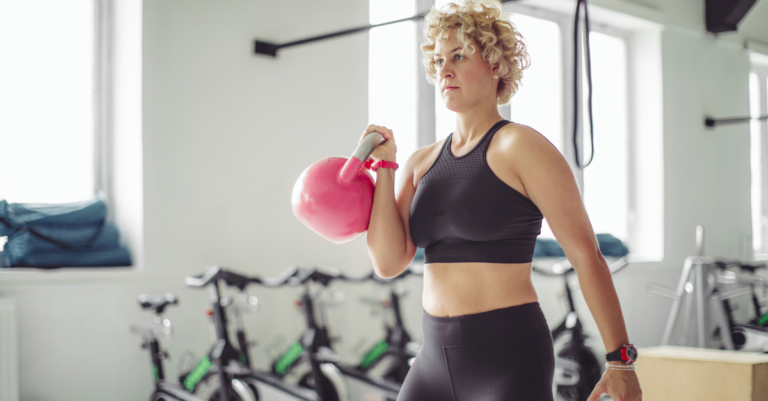
If you can complete all of your planned repetitions with good form and still feel like you could comfortably do a few more, it may be time to increase the resistance.
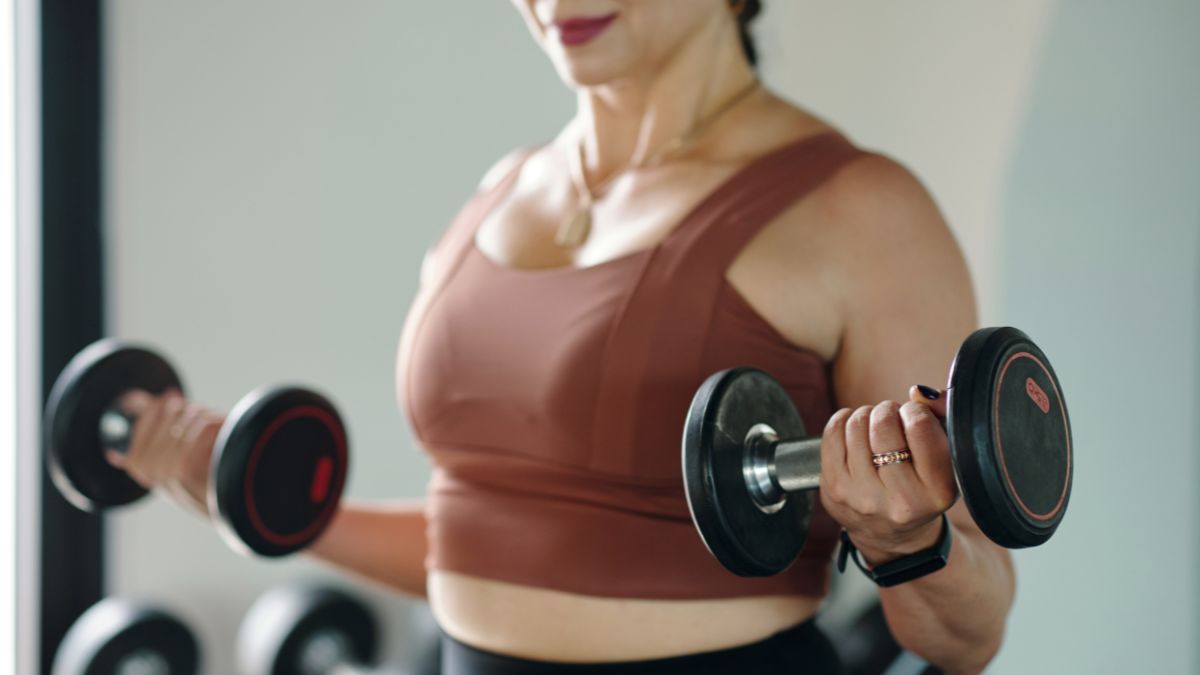
For example, you might do 10 triceps kickbacks using 3-pound dumbbells. Once that feels steady and controlled, it may be time to move to 5-pound dumbbells and begin with fewer repetitions while your body adjusts.
2. Perform More Repetitions
Before increasing the weight, you can often increase the number of quality repetitions you perform.
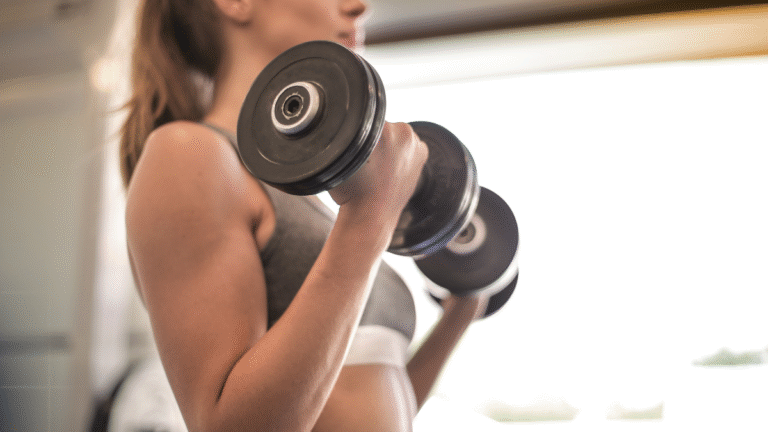
For example, you might begin with 8 biceps curls, progress to 10, and eventually complete 12 using the same dumbbells. Your muscles are doing more total work, even though the weight has not changed.
3. Add Another Set
Adding another set increases the total amount of work your muscles perform.
For example, you might begin with 2 sets of 10 glute bridges and later progress to 3 sets of 10. This can be especially useful when heavier weights are not available.
4. Slow Down the Movement (Time Under Tension)
This one is my favorite!
Your muscles do not count repetitions. They respond to how long they have to work, and moving more slowly increases that time. This can make the same exercise and weight feel significantly more challenging.
For example, you might lower the dumbbells during a shoulder press for 2 seconds at first, then progress to lowering them for 4 seconds. The weight has not changed, but your muscles have to work longer during each repetition.
5. Increase the Range of Motion
Moving through a larger, controlled range can increase how much work your muscles perform.
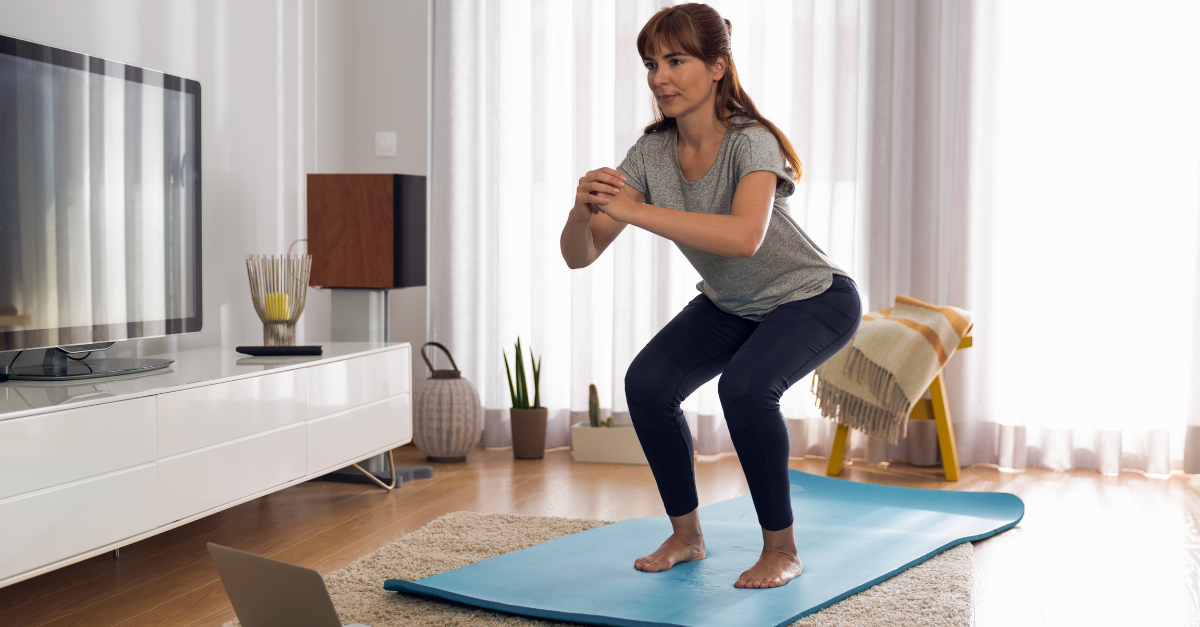
For example, you might begin with a shallow squat and gradually progress to sitting a little lower as your strength, mobility, and control improve. During a standing row, you might allow your arms to reach a little farther forward before pulling the weights back, as long as you can keep your posture steady and your shoulders comfortable.
A larger range is only useful when you can control it. Quality always comes before depth.
6. Progress to a More Challenging Exercise Variation
Sometimes you can make an exercise more demanding by changing the variation rather than increasing the weight.
For example:
- A sit-to-stand can become a squat that lightly taps the chair instead of fully sitting down.
- A glute bridge can include a pause at the top or progress to alternating marches or single leg.
- A wall push-up can be performed at a counter or another lower surface as your strength improves.
The exercise is still familiar, but the new version asks your muscles to work harder or gives your body more to control.
7. Change the Lever
A lever is the distance between the working muscle and the part of your body that is moving. In many exercises, extending your arms or legs farther away makes the movement more challenging.
For example:
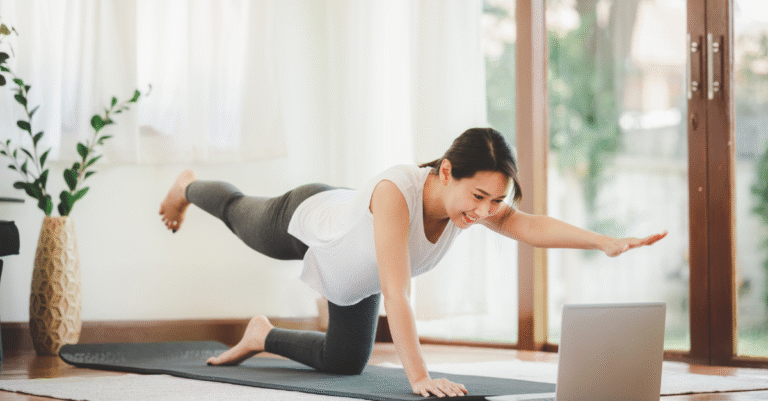
- During a dead bug, keeping your knee bent is usually easier than extending the leg farther away.
- During a core hold, keeping your arms close to your body is usually easier than reaching them overhead.
- During a plank, supporting yourself from your knees is usually easier than extending your legs into a full plank.
The exercise may look similar, but a longer lever gives your muscles more work to manage.
8. Add a Stability Challenge
An exercise can become more demanding when your body has more movement or resistance to control.
For example:
- A narrower stance (standing with your feet closer together) during an upper-body exercise gives you a smaller base of support.
- Holding one dumbbell at your side during a march requires your core to keep you from leaning toward the weight.
- Lifting one foot at a time during a suitcase march requires more balance and control than just holding the weight while standing.
This does not mean making every exercise unstable or using balance equipment unnecessarily. You want to add a manageable challenge while still moving safely and with good control.
9. Improve Your Technique
This is one of the most overlooked forms of progress. The same exercise and weight can become more effective when your posture, balance, breathing, and control improve. You may also notice that you rely less on other muscles to complete the movement.
Sometimes getting stronger looks smoother, steadier, and more controlled, not heavier.
10. Reduce Rest Between Sets
Shortening the time you rest between sets can make a workout feel more challenging and help improve muscular endurance and work capacity.
For example, you might begin by resting for 90 seconds between sets and gradually reduce that time to 60 seconds as your recovery improves. This is useful when it fits the goal of the workout, but it is not always the best choice when you are trying to lift heavier or maintain excellent form.
Progress Is Not Always More Weight
Some weeks, progress may mean lifting a heavier dumbbell. Other weeks, it may mean completing another repetition, moving through a larger range, recovering more quickly, or performing the exercise with better control.
These changes may seem small, but they show that your body is becoming stronger.
Strength is not measured by one number on a dumbbell. Progressive overload just means continuing to give your body an appropriate reason to adapt, and that reason will not always be more weight.
Photo Credits
Muscular Woman Lifting Dumbbells by Dragon Images
Doing Exercise at Home by Ikostudio

For many women, GLP-1 medications have made weight...
If you’re living with type 2 diabetes or obesity...
Most women on GLP-1s aren’t avoiding exercise...

When you start taking better care of yourself, the...

Losing weight is not easy, no matter how much...