If you’re on a GLP-1 and trying to lose weight, you’ve probably heard the statistic that up to 40 percent of the weight lost is lean mass1. And that sounds scary if you immediately think of muscle when you hear that.
Because if that’s true, it means you could be losing strength along with fat. And that totally changes the conversation.
The problem is, most people stop at the headline and don’t ask what “lean mass” actually includes, how it was measured, or what determines whether that loss is mostly water, organ tissue, or actual skeletal muscle.
Those things are important to know because if you don’t understand what’s happening while the scale is going down, you can absolutely lose more muscle than you need to. Not because the medication is attacking it, but because no one told you how to protect it.
So, before we panic over that 40 percent number, let’s slow it down and look at what it really means and what’s actually within your control.
What Makes Up Lean Body Mass?
Lean body mass (LBM) is everything in your body that isn’t fat. That includes:
- Muscles
- Bones
- Organs
- Tendons and ligaments
- Connective tissue
- Water
So, when you hear that people on GLP-1s “lose lean mass,” that doesn’t automatically mean they’re just losing muscle2. Lean mass is a category, and as you can see from the list, muscle is just one part of it.
Some of that loss can be:
- Water weight, especially from glycogen (stored carbs that hold water inside muscle)
- Even small changes in organ size, which naturally shrink when you’re eating less
- Fat that was stored inside the muscle itself (improving muscle quality)
This means that it’s not just your quads or glutes shrinking.
Your Body Has Three Types of Muscle (And They Adapt Differently)
When people talk about lean muscle, they usually mean the kind you build at the gym, but your body actually has three types of muscle:
- Cardiac muscle – this is your heart. It beats and pushes blood through your body 24/7, whether you think about it or not. Things like walking, cycling, swimming, or steady-paced movement make your heart stronger and more efficient. Over time, it can pump more blood with each beat and doesn’t have to work as hard at rest.
- Smooth muscle – the muscle wrapped around your organs. It helps with digestion, breathing, blood flow, and all other behind-the-scenes stuff you don’t consciously control.
- Skeletal muscle – the kind you can see and strengthen, it helps you lift, squat, carry groceries, stand tall, and even smile.
All three are extremely important, but they adapt in different ways. Skeletal muscle is the only type you can intentionally grow in size and strength through resistance training. When people worry about “losing muscle” on GLP-1s, this is the muscle they’re talking about. And that’s the one we care about protecting during weight loss.
What’s Actually Happening When You Lose Weight?
When you’re in a calorie deficit, meaning you’re using more energy than you’re eating, your body needs fuel. It will pull from stored energy to keep you functioning. That includes body fat, but also stored carbs and, if you’re not strength training or eating enough protein, muscle tissue as well.
Your body’s main goal is survival, not fat loss. It doesn’t know you are intentionally trying to lose body fat. It just knows energy is lower, so it pulls from wherever it can.
And early on, a lot of what drops is water. When your body burns through stored glycogen (carbs stored in your muscles), the water attached to it leaves too. That’s why the scale can move quickly in the beginning. This happens during any type of weight loss, not just on GLP-1s.
If the scale drops, that doesn’t automatically mean muscle loss. But muscle can be lost if you don’t give your body a reason to keep it.
Muscle Is “Expensive” for the Body to Keep
Muscle is metabolically active. That means it needs energy to maintain, even when you’re just sitting around. So the more muscle you have, the more energy your body naturally uses in a day.
But during weight loss, especially if it’s fast, your body is trying to hold on to energy. From a survival standpoint, muscle is “expensive.” If you’re not using it consistently, your body may decide it doesn’t need to keep all of it.
And that can lead to:
- Lower resting metabolic rate – With less muscle, your body needs less energy to run day to day. Over time, that can make weight regain easier, especially if you ever stop using GLP-1s.
- Poor balance and joint support – Muscles help stabilize your knees, hips, core, and spine. When they’re weaker, you feel less steady, and things like stairs, bending, or longer walks can feel harder.
- More fatigue – Less muscle means your body has to work harder to do everyday stuff, so you tire out more quickly.
- Higher risk of injury – Strong muscles act like shock absorbers. They take on force when you move or lift something heavy. When they’re weaker, more of that stress shifts to your joints instead.
Weight loss should never leave you feeling fragile.
Signs You Might Be Losing Too Much Muscle
- Everyday things feel harder than they used to
- You’re slouching more, or your body feels “wobbly”
- You’re losing weight but not resistance training
- You’re barely eating protein
- You’re getting sick all the time or healing slower than usual
How to Protect (and Even Build) Muscle on GLP-1s
GLP-1s lower appetite, so that means you’re most likely eating less, and less food means less protection for skeletal muscle. So you have to be intentional.
- Eat enough protein: Protein isn’t optional during weight loss, but it can be harder to hit your target when you feel nauseous or have GI issues. A good starting point is at least 1.2 grams per kilogram of your body weight (for example, if you weigh 200 pounds, that’s roughly 110 grams of protein per day). You can use this calculator to see what that looks like for you while on GLP-1s.
- Strength Train 2–3 Times a Week: You don’t need to crush it daily, but your muscles need a reason to stick around. Prioritize full-body strength training or split routines that challenge you, not exhaust you. You want steady progress, not punishment.
- Slow Down Your Reps: Fast and sloppy doesn’t build strong, toned muscle. Slow, controlled movements (especially during the lowering phase) help your muscles work harder without needing to lift super heavy. Plus, it’s gentler on joints and reduces injury risk.
- Move daily: Standing more, stretching, walking, stairs, housework. It all adds up and supports your metabolism.
- Get enough rest: Muscle doesn’t grow during the workout. It grows after. And when you’re eating less on a GLP-1, recovery matters even more. That means:
- Taking rest days seriously
- Giving your muscles time between workout sessions
- Not panicking if you need a little longer to bounce back at first
Download The Remedy Method Starter Workout Guide
This isn’t a full program, but it’s a solid place to start if you’re not sure what your body needs right now. It’s designed for women on GLP-1s who want to train with intention, without jumping into something random or too intense too soon. The focus is on quality reps, good movement patterns, and rebuilding strength the right way, especially if it’s been a while.
Final Thought
GLP-1 medications don’t magically eat your muscle. Muscle loss usually happens when:
- Calories drop
- Protein is too low
- Strength training isn’t there
The scale going down isn’t the problem. Getting weaker while it’s happening is, but you can influence that part.
If you want more structure around how to train during this phase, you can learn more about The Remedy Method or get to know how I work here.
And if you have questions, reach out. I’m happy to help.
Updated February 17, 2026
Resources
- Bikou A, Dermiki-Gkana F, Penteris M, Constantinides TK, Kontogiorgis C. A systematic review of the effect of semaglutide on lean mass: insights from clinical trials. Expert Opin Pharmacother. 2024 Apr;25(5):611-619. doi: 10.1080/14656566.2024.2343092. Epub 2024 Apr 18. PMID: 38629387. https://pubmed.ncbi.nlm.nih.gov/38629387/ ↩︎
- Neeland IJ, Linge J, Birkenfeld AL. Changes in lean body mass with glucagon-like peptide-1-based therapies and mitigation strategies. Diabetes Obes Metab. 2024 Sep;26 Suppl 4:16-27. doi: 10.1111/dom.15728. Epub 2024 Jun 27. PMID: 38937282. https://pubmed.ncbi.nlm.nih.gov/38937282/ ↩︎
Photo Credits
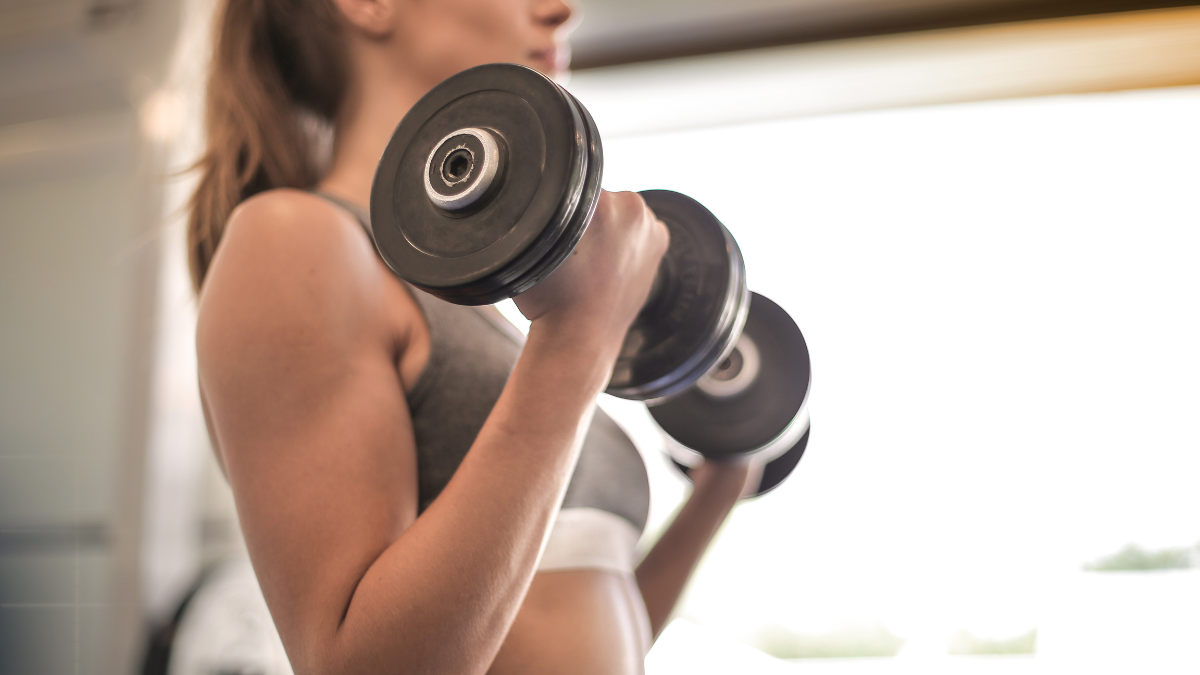
Fit Female in Activewear Holding Dumbbells by Andrea Piacquadio from Pexels
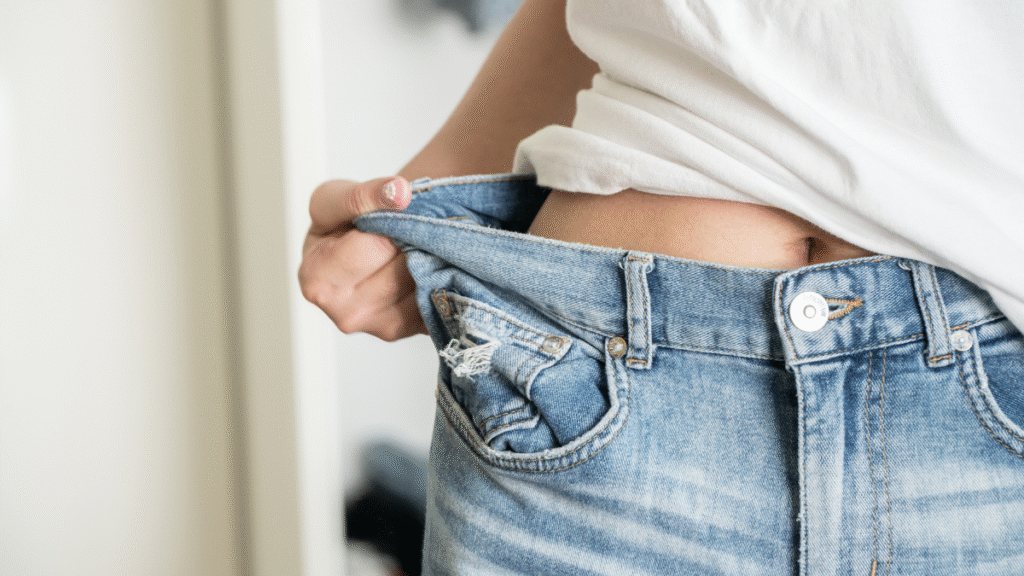
Person Showing Weight Loss with Loose Pants by NOMADNES

Walk through any grocery store and it’s tough to...

Your height, eye color, skin tone, and bone...

There’s a lot of noise out there about GLP-1 meds...
Being fit and balanced doesn’t mean extreme. It’s...

Losing weight is a major accomplishment. But even...
Did you know that during the 1930s–1950s, tobacco...