
A lot of women using GLP-1 medications talk...

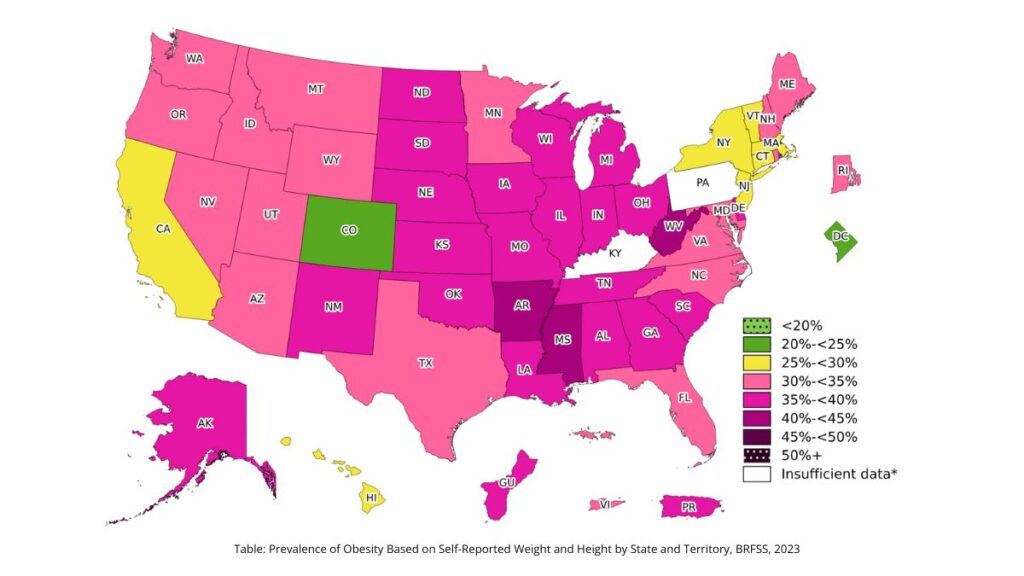
Something surprising is happening in the U.S. After...
If you’ve lived with obesity most of your life, this isn’t an irrational fear. You’ve lost weight before. You followed the rules. And at some point, your body pulled you back to where it wanted to be. So, when people say, “This time is different,” it’s hard to believe them.
The research is honest here. Many people do regain at least some weight after stopping GLP-1s. That can feel terrifying if your body has a long history of doing exactly that. Pretending otherwise doesn’t help.
What training does is not promise immunity from regain. That would be dishonest.
What it does give you is something real to build that isn’t erased the moment the scale shifts. Strength. Muscle. Better stamina. Improvements in blood sugar and blood pressure. A body that functions better in daily life, not just a body that weighs less.
You don’t get to fully decide how much weight your body wants to defend. But you do get to influence what that weight is made of, how your joints handle it, how stable your energy feels, and how capable you are inside your own body.
Those things matter whether your medication stays the same, changes, or eventually stops.
This question comes up a lot, especially from women in their 30s and early 40s who worry that starting now means they’ve somehow jumped the gun or done something wrong.
Many women in their 50s who use GLP-1s say the opposite. They wish this option had existed earlier, before decades of fighting their bodies, blaming themselves, and cycling through plans that never addressed the underlying biology.
GLP-1 medications are not prescribed because someone didn’t have enough discipline. They’re prescribed because obesity is driven by real physiological factors. Appetite signaling, hunger hormones, reward pathways, and energy use do not work the same way in every body.
For some people, starting earlier can actually mean less wear and tear over time. Less stress on joints, metabolic strain, and fewer years of weight loss and regain that take a toll on the body and the mind.
That said, being “young” does not automatically mean this medication is a lifelong commitment. Some people use it long-term. Some adjust the dose. Some transition to other supports later. What matters is that the decision is thoughtful and grounded in health, not pressure, shame, or fear.
This is one of the most common worries, and it’s a real one. For some women, it’s the reason they put off starting a GLP-1 in the first place.
What’s interesting is that many of those same women later say it became a non-issue. Not because food stopped mattering, but because it stopped feeling so intense.
Most people do not lose enjoyment of food. What changes is the urgency around it. The constant mental pull loosens up. You can still like the foods you like, but you often need less of them, and you feel satisfied sooner.
Some people notice their tastes shift. Very sweet or greasy foods can start to feel like too much. Others still enjoy them, just less often. And some foods actually taste better, especially when you’re eating in a way that leaves you feeling comfortable and steady afterward, not overfull or wiped out.
The important thing to understand is this: GLP-1s don’t take pleasure away. They reduce the feeling that food is in charge.
It’s also hard to imagine this shift while you’re still living with the intensity you feel now. The anxiety around wanting food, worrying about it, or negotiating with yourself about it does not stay the same once the medication is on board. Your brain can’t fully picture that right now, but it does change.
You don’t have to give anything up on day one. Many people keep eating their favorite foods, just in smaller amounts, and pay more attention to how they feel afterward. Not just whether it tasted good, but whether they felt energized, comfortable, or sluggish. That feedback starts to guide choices naturally, without forcing or rules.
Travel is a common worry, especially in the early weeks.
Most people can eat while traveling without much trouble, just in smaller amounts. Very heavy or greasy meals can feel uncomfortable for some at first, but eating a bit slower and paying attention to fullness usually helps more than people expect.
Many women say they still enjoy food on trips, but the experience feels calmer. There’s less pressure to overdo it and less fear of missing out. When meals are lighter or less processed, people often notice they actually have more energy and less stomach stress, which makes it easier to enjoy the trip itself.
Something else shifts, too. Food decisions tend to take up less mental space. You’re not constantly negotiating with yourself or worrying about what you “should” or “shouldn’t” eat. That mental quiet can make travel feel simpler and more relaxing.
For a lot of people, travel doesn’t become more restrictive on a GLP-1. It becomes easier because food stops being the main thing you have to manage.
This worry doesn’t come out of nowhere. Women living in larger bodies already get judged for how they look, what they eat, how they move, and whether they’re “trying hard enough.” Adding medication can feel like opening yourself up to a whole new layer of assumptions.
Some people will think you took a shortcut. Some won’t understand why obesity is treated medically at all. That doesn’t make them right, but it does make the fear real.
Training doesn’t exist to defend you against other people’s opinions. It gives you something quieter and more solid than that.
You know what your body can lift, carry, push, and climb. You feel the work in your muscles. You see the progress that doesn’t rely on before-and-after photos or explanations you don’t owe anyone.
This isn’t about proving anything. It’s about building a relationship with movement that respects what you’ve lived in this body, and treating obesity as medical work, not a character flaw.
If you’ve spent years restricting, dieting, tracking, restarting, and blaming yourself, “trying harder” usually just means running the same loop with more pressure and less trust in your body.
GLP-1s don’t replace effort. They change the conditions under which effort happens.
For many people, the medication makes it possible to eat in a way that supports health without constant mental strain. That’s not cheating. It’s addressing the biology that’s been pushing back the whole time.
At the same time, it helps not to start from zero. Small, steady changes before your first dose can make the transition easier on your body and your nervous system. Nothing extreme.
That might look like taking short walks most days, even ten minutes at a time. Cooking one simple meal at home instead of relying on something premade. Thinking through what you’ll do when a day goes off plan, so it doesn’t spiral.
It can also help to notice what you’re surrounding yourself with. What you scroll. What you save. What fills your mental space. Shifting some of that toward things that support how you want to feel, not just what looks good in the moment, can make the process feel more doable.
Trying harder shouldn’t be the goal. Setting yourself up so that effort actually works is a better one.
When weight changes quickly, it can be disorienting. Some women describe feeling grateful and unsettled at the same time. You may recognize yourself physically, but not emotionally. Or you may notice people responding to you differently, and that can land in complicated ways. Almost like moving through the world in a body that suddenly gets approval it didn’t before.
Training helps anchor identity in something more stable than size.
Strength and skill-based movement give you reference points that don’t depend on how you’re perceived. You know what your body can do. You can lift your suitcase without bracing for it. You can climb stairs without stopping. You can carry your groceries in one trip because you’re strong, not because you’re smaller.
Understanding obesity as a chronic medical condition shifts the story from “I finally fixed myself” to “I’m actively caring for my health and building a body I can live in.”
That’s a very different identity to carry forward.
A lot of women worry about this. Not just short-term side effects, but long-term health. Organs. Mental health. What this means five or ten years from now. Add in the confusion around FDA-approved medications versus compounded versions, and it can start to feel overwhelming fast.
Only your doctor or prescriber can walk you through the medical risk–benefit side of GLP-1s. That part matters, and it shouldn’t be rushed or minimized.
Movement and strength work sit on a different side of the equation. They’re the low-regret piece. Building muscle, improving balance, supporting your heart, and stabilizing metabolic health help you whether you stay on a GLP-1 long term, adjust your dose, or eventually come off.
Working with a trainer who understands GLP-1s also gives you another layer of awareness. Someone who can help you tell the difference between normal adjustment and something that feels off, so concerns get brought back to your doctor sooner rather than later.
This isn’t about replacing medical care. It’s about supporting your body while you’re receiving it.
If you’ve ever dealt with disordered eating, this concern is valid. When appetite changes quickly, it can feel unsettling. GLP-1s do affect hunger, fullness, and food reward, and some women notice mood shifts or old binge–restrict patterns creeping back in. That doesn’t mean it will happen to everyone, but it’s not something to brush off.
This is where structure matters.
Training can act as an anchor when everything else feels unfamiliar. Regular sessions. Clear expectations. Progress markers that have nothing to do with getting smaller. You’re showing up to relieve stress through movement, not to compensate for eating or to chase a deficit.
Education matters here, too. Learning how protein, fueling, and recovery support your muscles and nervous system reframes food as something functional, not something to control just because it feels easier to eat less.
The goal isn’t to override hunger or ignore it. It’s to build enough stability around movement and nourishment that changes in appetite don’t pull you back into old patterns.
Some women are afraid to say this out loud, but it’s real. What if the weight comes off, the medication works, you follow through, and… nothing inside feels resolved. A smaller body doesn’t automatically erase years of being talked to, looked at, or treated a certain way.
That realization can feel scary.
The work we do together on Zoom isn’t about fixing you or processing your feelings. It’s structured to build trust in your body. It’s about doable goals, small, measurable, real strength wins. Learning to notice effort and consistency instead of checking the mirror for proof that anything has “worked.”
When training, education, and medication work together, they create more stability. Your body starts to feel more capable and predictable, even if everything doesn’t suddenly feel perfect.
If you need deeper emotional support around identity or self-worth, that’s important and deserves the right professional. What I provide is a grounded, physical place to rebuild strength, confidence, and body awareness while things are changing.
You’re allowed to feel complicated about this. And you’re still worth taking care of while you do.
If you’re on a GLP-1 and unsure how to exercise safely or effectively, this is where we start.
Certified through nationally recognized, NCCA-accredited organizations with a focus on corrective exercise, strength training, and coaching women safely through body change.

Corrective & Strength Training
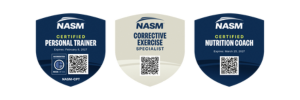
NCCA accreditation NASM Certified Personal Trainer (CPT), Corrective Exercise Specialist (CES), TRX Suspension Training
Pilates & Mind-Body Training
ISSA Certified Pilates Instructor, TRX Pilates
Weight Loss & Metabolic Education
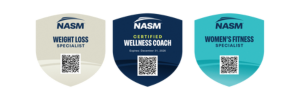
NASM Weight Loss Specialist, Women’s Fitness Specialist, Understanding Weight Loss Medications
Coaching & Safety
NASM Certified Nutrition Coach (CNC), Certified Wellness Coach (CWC), CPR/AED
Certified through nationally recognized, NCCA-accredited organizations with a focus on corrective exercise, strength training, and coaching women safely through body change.

Corrective & Strength Training
NCCA accreditation NASM Certified Personal Trainer (CPT), Corrective Exercise Specialist (CES), TRX Suspension Training
Pilates & Mind-Body Training
ISSA Certified Pilates Instructor, TRX Pilates
Weight Loss & Metabolic Education
NASM Weight Loss Specialist, Women’s Fitness Specialist, Understanding Weight Loss Medications
Coaching & Safety
NASM Certified Nutrition Coach (CNC), Certified Wellness Coach (CWC), CPR/AED
Share a bit about where you are so I can meet you there with the right kind of training support.
(Find out in less than 1 minute!)
Answer a few quick questions about how your body feels and how you like to exercise. This will help you see if The Remedy Method, which blends corrective exercise, Pilates-style control, and strength training for women on GLP-1 medications, is a good fit for you.
A quick check-in on your last meal and today’s patterns so you can see what your body might be asking for next.
Use this tool to look at your Body Mass Index (BMI) and waist size.
BMI compares your height and weight to estimate general body size. It does not measure fat or muscle and cannot show how your body is changing with strength training or GLP-1 use. It is simply a numerical estimate.
Waist size provides additional information because abdominal fat is more closely linked to metabolic risk than fat stored in other areas. Measuring the waist gives a better idea of where the body is holding weight.
Both BMI and waist size can change quickly when someone starts a GLP-1. Muscle, water, and fat often shift at different rates, so these numbers work best as general reference points rather than something to obsess over.
This tool gives you a simple snapshot you can use for your own self-awareness or just to know before doctor’s appointments. It’s one of several things to pay attention to, along with movement quality, strength levels, recovery, and daily well-being.
Waist size is optional. The tool will still calculate your BMI if you skip that section.
BMI Categories:
Unit of measure
Sex
Age (years)
Height (feet)
Height (inches)
Weight (pounds)
Waist circumference (inches, optional)
Height (cm)
Weight (kg)
Waist circumference (cm, optional)
Please keep in mind that these numbers simply give you a general snapshot. They do not measure muscle, fitness level, or how your body is changing with strength training or GLP-1 use. They are just reference points you can pair with how you feel, how you move, and what you discuss with your medical team.
This tool is for education only. It cannot diagnose medical conditions. If you have new symptoms or health concerns, talk with your medical team for guidance. For adults only. BMI is one data point and does not reflect muscle, body composition changes on GLP-1s, or overall health.
Answer these questions about how your body feels today. This tool helps you find a safe starting point for key movement patterns if you are using GLP-1 medications or coming back to exercise after weight loss. The goal is to match your body to the right level of support, not to push through pain or fear.
1. How do your knees feel when you walk, use stairs, or stand up from a chair?
2. How does your low back feel today?
3. How steady do you feel on your feet?
4. Can you safely get down to the floor and back up on your own?
5. Any foot or ankle pain when you walk or stand?
6. Right now, how confident do you feel about moving your body?
This tool is for education only. It cannot diagnose injuries. If you have strong pain, falls, or new symptoms, talk with your health care team before starting or changing your exercise plan.
Many women notice changes in balance, coordination, and strength as they lose weight. This tool helps you choose movements that feel supportive instead of stressful, so you can build confidence and avoid overloading joints or overworking muscles that are still adjusting.
1. Have you eaten a small meal or snack in the last 2 to 3 hours?
2. How is your stomach right now?
3. How is your energy right now on a scale from 1 to 10?
4. Have you felt dizzy, faint, or lightheaded when you stand up today?
5. Any new sharp pain, chest tightness, or trouble breathing since your last workout?
This tool is for education only and does not replace medical advice. If you ever feel unsure, choose rest and contact your health care team.
Enter your daily calorie target and choose your goal. This tool shows you how to divide your required calories into protein, fats, and carbohydrates. This breakdown is called a macro split, and it helps you understand where your energy is coming from each day.
For women on GLP-1 medications or in active weight loss, a balanced macro split can make eating feel easier. It helps you stay fueled, support muscle, and avoid the big highs and lows that can happen when appetite is low.
Most people feel their best with higher protein, moderate fats, and enough carbohydrates to support energy and recovery. A common place to start is around 30 percent protein, 30 percent fats, and 40 percent carbohydrates, though your personal needs may shift based on your appetite, training, and how your body feels.
About the protein number: The protein number shown here may be higher or lower than the number from the daily protein calculator. That is expected.
This tool uses a percentage of your calories, while the protein calculator uses your body weight to set a muscle-protective minimum.
How to use both together: Follow the protein calculator for your daily minimum.
If this macro calculator shows a higher protein number and it feels doable, you can aim for it. If not, stick to your minimum and adjust carbs and fats around it.
You can use your TDEE number from the TDEE calculator or enter any calorie target your medical
team or coach has given you.
Use my TDEE Calculation
Protein: 0 g per day
Fat: 0 g per day
Carbs: 0 g per day
These macro splits are set for people using GLP-1 medications or going through weight loss. Protein is higher to help protect lean muscle and support fullness. Fats are set at a steady level to support hormones and absorption of vitamins. Carbohydrates stay high enough to support energy and movement. This is a starting point, not a prescription. Your medical team may adjust your needs based on your health, labs, and medication plan.
Enter your weight and choose how often you strength train. The calculator will give you a daily protein range in grams. This range helps support muscle strength, recovery, and overall health.
The RDA (Recommended Dietary Allowance) for protein is 0.8 grams per kilogram of body weight. That amount is the minimum needed for basic health, not for muscle protection or strength training.
People may need more than the RDA when they are:
Because these situations increase your protein needs, this calculator uses 1.2 grams per kilogram as the starting point. This level is better for maintaining lean muscle, especially during weight loss.
NOTE: This number is based on your body weight, which makes it the best baseline for protecting muscle during weight loss or while using GLP-1 medications. Treat this as your daily minimum.
If the macro calculator shows a higher protein number, you can aim for it if it feels realistic with your appetite. If not, stay with this minimum and adjust carbs and fats around it.
Recommended range:
0 to 0 grams per day
This range is an estimate based on body weight and strength training level. It is a guide, not a strict rule. Your medical team may adjust your protein needs, especially while you are on GLP-1 medication.
Fill in your details to find your Total Daily Energy Expenditure (TDEE) and Basal Metabolic Rate (BMR).
Your TDEE is the total amount of energy your body uses in a full day. This includes everything. Your workouts, walking, cleaning, daily movement, shifting posture, fidgeting, and even the energy it takes to digest your food.
Part of your TDEE is your BMR. Your BMR is the energy your body needs for basic life functions like breathing, circulating blood, maintaining organs, and keeping your body temperature stable. This is what your body would use even if you stayed in bed all day.
Understanding both numbers is helpful if you are on a GLP-1 or working on your health. Appetite can drop quickly, which makes it easy to undereat without noticing. Knowing your TDEE and BMR shows you how much fuel your body actually needs so you can keep your energy up, protect muscle, and support safe and steady fat loss.
You can choose from three formulas to calculate these numbers. Mifflin-St. Jeor and Harris-Benedict use height, weight, age, and sex. Katch-McArdle uses body fat percentage if you know it. They use slightly different math equations, but they all estimate the same thing. Mifflin-St. Jeor is generally the most accurate for most people.
BMR: 0 kcal per day
TDEE: 0 kcal per day
These are estimates. Calculators may read low for people with more muscle and may not work well for people living with obesity. Use as a guide, not an exact number.
Form-focused. Emotionally aware. Personalized support from the comfort of your home.
Private, 1:1 via Zoom
Flexible plan.
Flexible plan.