
A lot of women using GLP-1 medications talk...

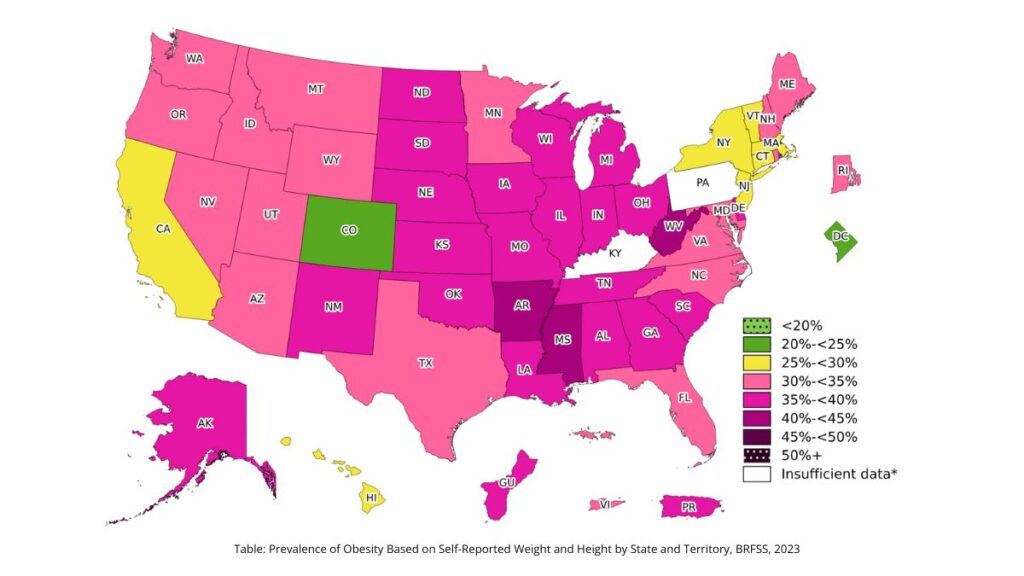
Something surprising is happening in the U.S. After...
GLP-1 medications change how hunger, energy, and digestion work. That’s why most advice about eating and exercise stops making sense once you’re on them. This tool was created to help you adapt your behavior while your biology is changing. Not by tracking harder or restricting more. But by learning how to respond to your body intelligently.
Printable & digital
Positive thinking
Vague goals
pretending obstacles don’t exist
WOOP stands for Wish, Outcome, Obstacle, and Plan.
It’s a science-backed behavioral method developed by psychologist Gabriele Oettingen and widely used in health, psychology, and medical settings to help people move from intention to follow-through.
WOOP makes the invisible visible.
It trains your brain to recognize patterns and act on them more automatically.
It’s used because it works, not because it sounds good.
WOOP doesn’t rely on manifestation or motivation, and it doesn’t pretend that obstacles won’t happen.
It deliberately plans for them.
What makes WOOP different from typical journaling or goal setting is that it doesn’t stop at:
“What I want…”
It forces you to look directly at what will get in the way and decide, in advance, how you’ll respond.
That is why it works in real life, not just on paper.
And that’s exactly why I adapted it specifically for women using GLP-1 medications.
Each WOOP takes just a few minutes to complete, but it changes how you approach your choices throughout the day.
Most GLP-1 resources focus on what:
to eat
to avoid
side effects to expect
The WOOP Planning Tool focuses on how to:
Anticipate and plan for what gets in the way
Respond intelligently instead of reactively when hunger is low
Protect muscle and energy
Build habits that still make sense if your dose changes, plateaus, or ends
This isn’t about being strict. It’s about being specific.
When you download the GLP-1 WOOP Planning Tool, you’ll receive:
A 3–6-month planning framework for adapting to GLP-1s
Weekly and daily WOOP templates to turn intention into real-life action
A structure that protects muscle, energy, and long-term results
A way to plan that doesn’t revolve around willpower or restriction
This is not a food log. Not a symptom tracker. Not a journal.
It’s a behavioral tool designed to help you operate your body more intelligently as it changes.
You can print it as many times as you’d like or use it digitally in any note-taking app.
This tool is for women using GLP-1 medications who:
The GLP-1 WOOP Tool gives you structure. My virtual one-on-one training programs show you how to implement this in a way that actually fits your life.
I work with women using GLP-1s who want strength without punishment, muscle protection without burnout, and programming that respects how their bodies are changing. All from the safety of your home.
If you’d like to learn more about how I apply this thinking through The Remedy Method, click the video below to see how I work with women on GLP-1s.
GLP-1 medications often change appetite and energy even before or without significant weight loss. Many women are under-fueled without realizing it, which can lead to fatigue, lightheadedness, or feeling unsteady during workouts. When energy is unpredictable, the body doesn’t tolerate training stress the same way.
Not exactly. The bigger issue is uncertainty. Many women don’t know what their bodies can safely handle on any given day. That fear of crashing, getting nauseous, or overdoing it makes exercise or resistance training feel risky, even when they know muscle protection matters.
Women are frequently told that effective resistance or strength training has to be intense. When energy is low or inconsistent, that message creates a bind: push hard and risk feeling awful, or avoid training and worry about muscle loss.
100% yes. Muscle responds to tension, control, and consistency, not exhaustion. Intensity is only one tool, and it’s often the wrong one early on or during energy fluctuations.
I adjust training to match the body’s current capacity while still stimulating muscle.
That often means:
This allows women to build mind muscle connection that stimulates strength and teaches the body to retain muscle without guessing or crashing.
Some questions are optional because good coaching depends just as much on readiness and trust as it does on data.
Weight, for example, can be useful in some contexts. It helps establish baselines and guide certain nutrition decisions. But it does not always need to lead the conversation, and not everyone is in the same place emotionally or mentally when it comes to sharing it.
I care first about how your body feels and functions, your energy, pain, movement history, confidence, and what your body can realistically handle right now. Those things tell me how to train you safely and effectively far more than a single number ever could on its own.
Making some questions optional gives you control over how that conversation enters the room. And when you are ready to talk about something, we can always revisit it together during onboarding or later on.
Nothing important is ignored. It is just approached with intention, timing, and respect.
That can come with time. The goal early on is to move from doing nothing to doing something effective and repeatable. As confidence, routine, and energy awareness improve, training can expand when it makes sense.
GLP-1 strength training isn’t about pushing through fatigue. It’s about adjusting the stimulus so strength is still built, even when energy is unpredictable.
It’s actually pretty cool. I meet you live on Zoom, just like an in-person session.
Before each session, we’ll talk about what training will look like that day so you’re ready to go.
During the session, I demonstrate what I’m looking for and coach your form in real time. It’s private, flexible, and often even more effective than being in a studio.
No distractions. No judgment. Just you and me working together toward your goals.
It’s super convenient, accessible, and lots of fun. It feels like working out with a friend who genuinely wants to see you succeed.
Answer a few quick questions about how your body feels and how you like to exercise. This will help you see if The Remedy Method is a good fit for you.
It starts with a short form. From there, we connect by email or a brief Zoom call, whatever feels most comfortable.
If it’s a good fit, we begin live virtual sessions. Private, one-on-one training guided by me in real time, right where you are.
No gym. No commute. No apps. Just focused training built around you.
Share a bit about where you are so I can meet you there with the right kind of training support.
(Find out in less than 1 minute!)
Answer a few quick questions about how your body feels and how you like to exercise. This will help you see if The Remedy Method, which blends corrective exercise, Pilates-style control, and strength training for women on GLP-1 medications, is a good fit for you.
A quick check-in on your last meal and today’s patterns so you can see what your body might be asking for next.
Use this tool to look at your Body Mass Index (BMI) and waist size.
BMI compares your height and weight to estimate general body size. It does not measure fat or muscle and cannot show how your body is changing with strength training or GLP-1 use. It is simply a numerical estimate.
Waist size provides additional information because abdominal fat is more closely linked to metabolic risk than fat stored in other areas. Measuring the waist gives a better idea of where the body is holding weight.
Both BMI and waist size can change quickly when someone starts a GLP-1. Muscle, water, and fat often shift at different rates, so these numbers work best as general reference points rather than something to obsess over.
This tool gives you a simple snapshot you can use for your own self-awareness or just to know before doctor’s appointments. It’s one of several things to pay attention to, along with movement quality, strength levels, recovery, and daily well-being.
Waist size is optional. The tool will still calculate your BMI if you skip that section.
BMI Categories:
Unit of measure
Sex
Age (years)
Height (feet)
Height (inches)
Weight (pounds)
Waist circumference (inches, optional)
Height (cm)
Weight (kg)
Waist circumference (cm, optional)
Please keep in mind that these numbers simply give you a general snapshot. They do not measure muscle, fitness level, or how your body is changing with strength training or GLP-1 use. They are just reference points you can pair with how you feel, how you move, and what you discuss with your medical team.
This tool is for education only. It cannot diagnose medical conditions. If you have new symptoms or health concerns, talk with your medical team for guidance. For adults only. BMI is one data point and does not reflect muscle, body composition changes on GLP-1s, or overall health.
Answer these questions about how your body feels today. This tool helps you find a safe starting point for key movement patterns if you are using GLP-1 medications or coming back to exercise after weight loss. The goal is to match your body to the right level of support, not to push through pain or fear.
1. How do your knees feel when you walk, use stairs, or stand up from a chair?
2. How does your low back feel today?
3. How steady do you feel on your feet?
4. Can you safely get down to the floor and back up on your own?
5. Any foot or ankle pain when you walk or stand?
6. Right now, how confident do you feel about moving your body?
This tool is for education only. It cannot diagnose injuries. If you have strong pain, falls, or new symptoms, talk with your health care team before starting or changing your exercise plan.
Many women notice changes in balance, coordination, and strength as they lose weight. This tool helps you choose movements that feel supportive instead of stressful, so you can build confidence and avoid overloading joints or overworking muscles that are still adjusting.
1. Have you eaten a small meal or snack in the last 2 to 3 hours?
2. How is your stomach right now?
3. How is your energy right now on a scale from 1 to 10?
4. Have you felt dizzy, faint, or lightheaded when you stand up today?
5. Any new sharp pain, chest tightness, or trouble breathing since your last workout?
This tool is for education only and does not replace medical advice. If you ever feel unsure, choose rest and contact your health care team.
Enter your daily calorie target and choose your goal. This tool shows you how to divide your required calories into protein, fats, and carbohydrates. This breakdown is called a macro split, and it helps you understand where your energy is coming from each day.
For women on GLP-1 medications or in active weight loss, a balanced macro split can make eating feel easier. It helps you stay fueled, support muscle, and avoid the big highs and lows that can happen when appetite is low.
Most people feel their best with higher protein, moderate fats, and enough carbohydrates to support energy and recovery. A common place to start is around 30 percent protein, 30 percent fats, and 40 percent carbohydrates, though your personal needs may shift based on your appetite, training, and how your body feels.
About the protein number: The protein number shown here may be higher or lower than the number from the daily protein calculator. That is expected.
This tool uses a percentage of your calories, while the protein calculator uses your body weight to set a muscle-protective minimum.
How to use both together: Follow the protein calculator for your daily minimum.
If this macro calculator shows a higher protein number and it feels doable, you can aim for it. If not, stick to your minimum and adjust carbs and fats around it.
You can use your TDEE number from the TDEE calculator or enter any calorie target your medical
team or coach has given you.
Use my TDEE Calculation
Protein: 0 g per day
Fat: 0 g per day
Carbs: 0 g per day
These macro splits are set for people using GLP-1 medications or going through weight loss. Protein is higher to help protect lean muscle and support fullness. Fats are set at a steady level to support hormones and absorption of vitamins. Carbohydrates stay high enough to support energy and movement. This is a starting point, not a prescription. Your medical team may adjust your needs based on your health, labs, and medication plan.
Enter your weight and choose how often you strength train. The calculator will give you a daily protein range in grams. This range helps support muscle strength, recovery, and overall health.
The RDA (Recommended Dietary Allowance) for protein is 0.8 grams per kilogram of body weight. That amount is the minimum needed for basic health, not for muscle protection or strength training.
People may need more than the RDA when they are:
Because these situations increase your protein needs, this calculator uses 1.2 grams per kilogram as the starting point. This level is better for maintaining lean muscle, especially during weight loss.
NOTE: This number is based on your body weight, which makes it the best baseline for protecting muscle during weight loss or while using GLP-1 medications. Treat this as your daily minimum.
If the macro calculator shows a higher protein number, you can aim for it if it feels realistic with your appetite. If not, stay with this minimum and adjust carbs and fats around it.
Recommended range:
0 to 0 grams per day
This range is an estimate based on body weight and strength training level. It is a guide, not a strict rule. Your medical team may adjust your protein needs, especially while you are on GLP-1 medication.
Fill in your details to find your Total Daily Energy Expenditure (TDEE) and Basal Metabolic Rate (BMR).
Your TDEE is the total amount of energy your body uses in a full day. This includes everything. Your workouts, walking, cleaning, daily movement, shifting posture, fidgeting, and even the energy it takes to digest your food.
Part of your TDEE is your BMR. Your BMR is the energy your body needs for basic life functions like breathing, circulating blood, maintaining organs, and keeping your body temperature stable. This is what your body would use even if you stayed in bed all day.
Understanding both numbers is helpful if you are on a GLP-1 or working on your health. Appetite can drop quickly, which makes it easy to undereat without noticing. Knowing your TDEE and BMR shows you how much fuel your body actually needs so you can keep your energy up, protect muscle, and support safe and steady fat loss.
You can choose from three formulas to calculate these numbers. Mifflin-St. Jeor and Harris-Benedict use height, weight, age, and sex. Katch-McArdle uses body fat percentage if you know it. They use slightly different math equations, but they all estimate the same thing. Mifflin-St. Jeor is generally the most accurate for most people.
BMR: 0 kcal per day
TDEE: 0 kcal per day
These are estimates. Calculators may read low for people with more muscle and may not work well for people living with obesity. Use as a guide, not an exact number.
Form-focused. Emotionally aware. Personalized support from the comfort of your home.
Private, 1:1 via Zoom
Flexible plan.
Flexible plan.